
KrisFlyer vs Asia Miles vs Avios in 2026
A 2026 comparison of KrisFlyer, Asia Miles, and Avios: expiry rules, redemption strengths, transfer access, and which programme fits which …
Read article →Independent Miles Mosaic guide. No programme partnerships, no account linking, no scraped balances. Sources cited below; corrections welcomed.
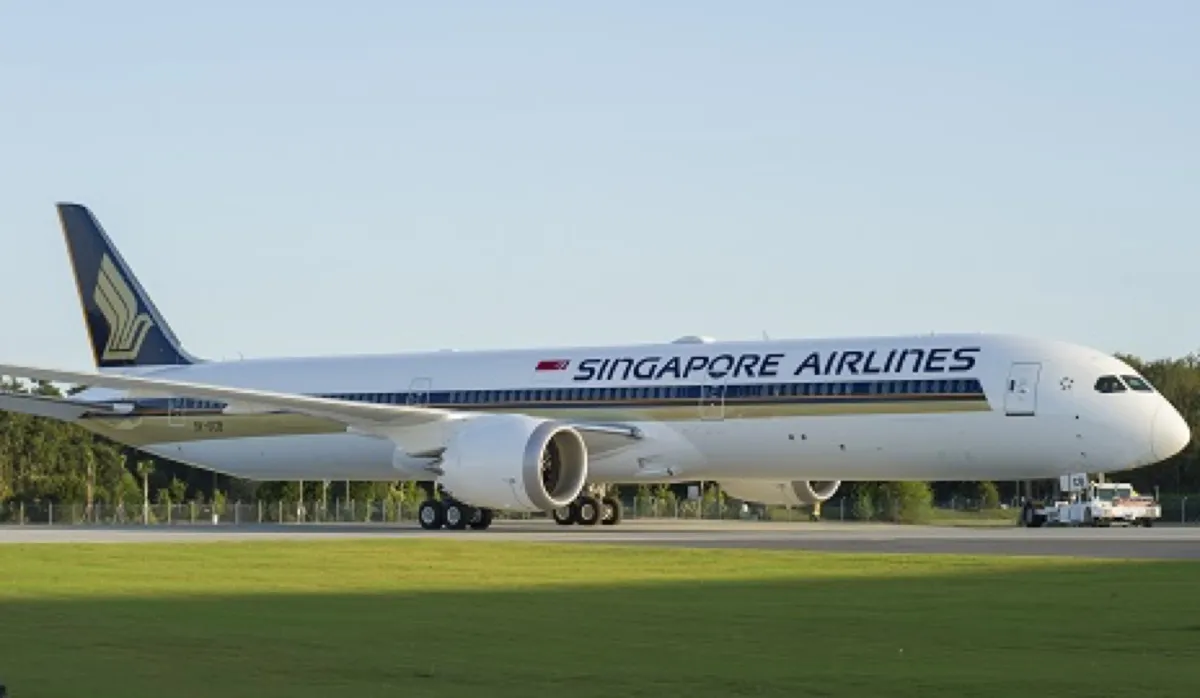
Singapore Airlines has opened a new door for KrisFlyer miles: cruises. Through the KrisFlyer Cruise platform, members can now redeem miles against sailings from more than 40 cruise lines. The honest headline, though, is the rate. At 200 miles per US$1, you are getting half a US cent per mile, and that number should drive every decision that follows.
This guide covers how the scheme works, what the maths really says, and the narrow set of situations where redeeming miles for a cruise is the right call rather than a quiet waste of a good balance.
KrisFlyer Cruise is a booking platform Singapore Airlines runs with Arrivia, a cruise-booking specialist, and the miles-redemption option went live in 2026. The launch announcement puts the catalogue at more than 30,000 itineraries across 40-plus lines, including Royal Caribbean, Princess and Disney, for a programme of 11.8 million members. Some lines are bookable online; others still require a phone booking, as The MileLion noted when redemptions launched.
The mechanics are simple, and the fine print is where the real rules live, per the platform's own FAQ. Miles redeem at 200 KrisFlyer miles per US$1 against the cruise fare only, with a minimum of 1,000 miles per transaction. You can cover part or all of the fare; whatever miles do not cover, you pay in cash before the final payment deadline. Taxes, port expenses, gratuities, shore excursions and onboard spending are always cash. Cancel and any refund comes back pro-rata in the original miles-and-cash split, taking up to 12 weeks, with refunded miles keeping their original expiry date.
Half a US cent per mile only means something next to the alternatives, so here is the comparison that matters.
| Redemption | Miles | What you get | Approximate value per mile |
|---|---|---|---|
| Cruise fare credit | 54,500 | US$272.50 off a cruise fare | 0.5 US cents |
| Business Saver, Singapore to Tokyo (one way) | 54,500 | A seat that routinely sells for US$2,000 or more | roughly 4 cents, often more |
| Economy Saver, Singapore to Tokyo (one way) | 25,500 | A fare commonly in the US$300-500 range | 1.2-2 cents |
The same 54,500 miles that shave US$272.50 off a cruise fare can, on the current award chart, book a one-way Business Saver seat from Singapore to Tokyo. Even an unremarkable economy redemption clears double the cruise rate. That gap is not a rounding error; it is the difference between using miles as a premium-travel currency and using them as a low-grade discount voucher. For the fuller picture of what KrisFlyer miles can do against rival currencies, see our KrisFlyer vs Asia Miles vs Avios comparison.
A worked example makes the trade-off concrete. Take a seven-night sailing with a fare of US$3,000 for two people. Covering the whole fare with miles would consume 600,000 KrisFlyer miles, a balance that could otherwise book five one-way Business Saver seats to Tokyo with change to spare. Covering just US$500 of it costs 100,000 miles, still nearly the price of a one-way Business Saver to Europe. However you slice the split, the cruise absorbs miles at a rate that would make any award-desk agent wince. The arithmetic never improves, because the rate is fixed; the only variable is how many miles you feed it.
So the default answer is: book flights with your miles, pay for cruises with money. The interesting question is when that default flips.
Miles about to expire. This is the big one, and we come back to it below. A mile that lapses next month is worth zero; half a cent beats nothing by an infinite margin.
Small leftover balances. If an account holds 8,000 miles with no realistic path to the 25,500 an economy award needs, the 1,000-mile minimum makes a cruise top-up one of the few redemptions that will actually take your orphaned miles.
No realistic flight redemption. Award seats in premium cabins are release-controlled and competitive. If your dates are fixed, your route has no Saver space, and you were paying for a cruise anyway, a below-par redemption you will actually use beats a theoretical one you never will.
You were booking this cruise regardless. The cash-and-miles split means you can apply exactly the number of miles you want to burn, from 1,000 upwards, without distorting the holiday itself.
Outside those four, spending miles at half a cent is the kind of decision the buy-miles industry loves and your future self regrets, the same value discipline we apply in should you buy miles.
The booking flow deserves a short walk-through, because it differs from a flight redemption in ways that catch people out. You search and price the cruise in cash first; the miles come in at payment, where you choose how much of the fare to cover with your balance. There is no award chart and no availability game, because you are simply paying a cash price with a different instrument. That is both the convenience and the trap: nothing about the process reminds you that the instrument is worth four times more elsewhere.
A few practical notes from the platform's own terms. The redemption applies to new bookings made through KrisFlyer Cruise, not to reservations made directly with a cruise line or through another agency, so the decision has to be made before you book, not after. The miles leave your account immediately at confirmation. And because refunds land pro-rata in the original split and can take up to twelve weeks, a cancelled sailing ties up your balance for a quarter of a year. None of this is unreasonable, but all of it argues for using the platform deliberately rather than impulsively.
It is also worth pricing the same sailing on a general cruise-booking site before committing. The value of a mile here depends entirely on the cash fare the platform quotes; if the same cabin sells for less elsewhere, your effective rate per mile drops below the headline half-cent, and the case for spending miles weakens further.
Cruise bookings do earn miles: 2 KrisFlyer miles per US$1 spent on the cruise fare, with taxes, port charges and onboard spending excluded, and nothing earned on the portion you pay with miles. But note what is missing. KrisFlyer Cruise is not among the partners that award Elite miles or PPS Value; Singapore Airlines' ground-earning scheme covers Kris+, KrisShop and Pelago only. A cruise moves you no closer to Elite Silver, Elite Gold or PPS Club, however large the fare. If status is the goal, the earning map in our KrisFlyer elite status guide shows where the real levers are.
KrisFlyer's expiry policy is the pressure that makes a 0.5-cent redemption tempting. Miles expire 36 months after crediting, at the end of the equivalent month. There is a one-time paid extension, six months for base members and twelve for Elite Silver and Gold, and miles belonging to PPS Club members stop expiring altogether while status is held. But once an extension is spent, the next stop is the void.
The calendar arithmetic favours the organised. Because miles expire at month-end in their thirty-sixth month, a balance never vanishes without warning; the date is knowable years in advance. Award space for premium cabins tends to open along a booking horizon of several months, so a member who checks expiry twice a year always has a redemption window before the cliff. The extension option then becomes what it should be, a paid convenience for genuine edge cases rather than a recurring tax on inattention.
The better play is never reaching that cliff. If you can see a batch of miles expiring five months out, you have time to plan a flight redemption worth four times as much; if you notice the week before, the cruise platform suddenly looks like a rescue. That visibility is precisely what Miles Mosaic tracks: your balances and their expiry dates across KrisFlyer and every other programme you hold, so an expiring batch becomes a planning prompt rather than an emergency.
It is worth being clear-eyed about why this product exists. Loyalty programmes carry their unredeemed miles as a liability, and every mile spent at half a cent instead of four cents settles that liability at a fraction of the cost of an award seat. Cruise platforms, wine shops and merchandise catalogues all serve the same quiet purpose: they give members with expiring or orphaned balances somewhere to spend, and they let the programme book the redemption cheaply. That does not make them bad products. It makes them products designed for a specific situation, and the design works against anyone who wanders in without one.
The membership maths reinforces the point. KrisFlyer counts over eleven million members, and the overwhelming majority hold balances far below what a long-haul premium award needs. For that majority, an outlet that accepts any balance above a thousand miles is genuinely useful. For the minority actively saving towards a business-class redemption, it is a temptation dressed as a feature. Know which group you are in before you tap redeem.
KrisFlyer Cruise is a genuinely useful escape valve, and a poor destination. At 200 miles per US$1 it turns a premium-travel currency into a modest discount code, which is exactly the right trade when the alternative is expiry and exactly the wrong one when 54,500 miles could be a flat bed to Tokyo. Use it for miles you would otherwise lose, orphaned balances, and cruises you were paying for anyway. For everything else, the award chart is still where KrisFlyer miles earn their reputation.
See your requalification forecast in under a minute. No account, and never a loyalty password.
Forecast my status, free →Share
Last reviewed: · How we research and update
A 2026 comparison of KrisFlyer, Asia Miles, and Avios: expiry rules, redemption strengths, transfer access, and which programme fits which …
Read article →How to reach KrisFlyer Elite Silver and Gold in 2026: the Elite mile thresholds, the up-to-20% you can add from ground spend, and the two c…
Read article →A 2026 guide to buying airline miles: when it makes sense, when it is a trap, and how to evaluate a sale honestly without fooling yourself …
Read article →Singapore Airlines KrisFlyer Elite Gold in 2026: 50,000 elite miles in 12 months, Star Alliance Gold, KrisFlyer Gold Lounge.
Read article →