Aeroplan 50K Status: 2026 Tracker
Air Canada Aeroplan 50K in 2026: 50,000 SQC qualification, Star Alliance Gold, and Maple Leaf Lounge access at AC hubs.
Read article →Independent Miles Mosaic guide. No programme partnerships, no account linking, no scraped balances. Sources cited below; corrections welcomed.
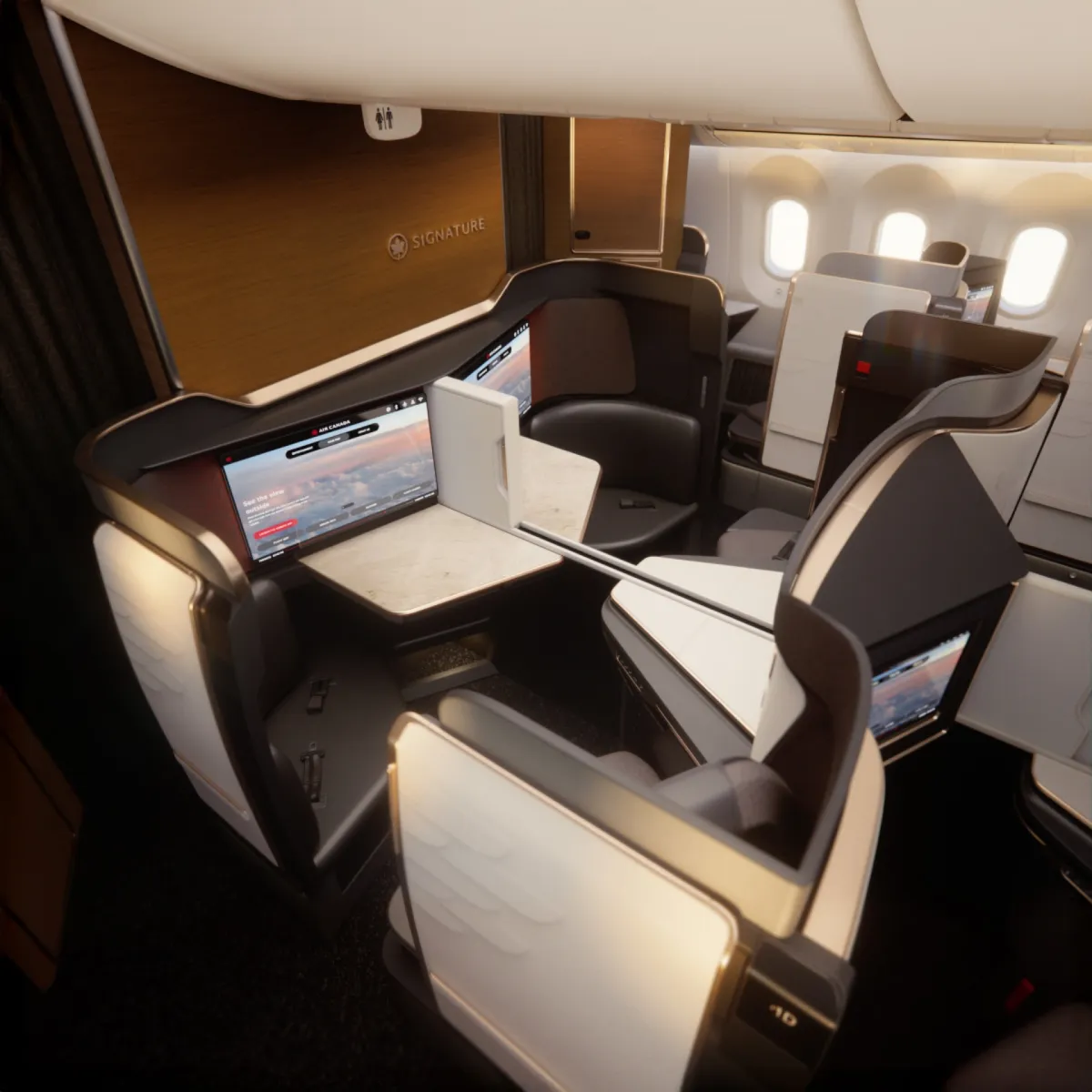
Air Canada's new Aeroplan award chart took effect on 1 June 2026, and the shape of it is worth studying even if you never touch the programme. Partner premium-cabin awards rose, some sharply. Everything within North America stayed put. A handful of short-haul business awards actually got cheaper.
That mix, higher at the aspirational end, flat in the middle, a few token cuts, is what a modern "good citizen" devaluation looks like. Here is what actually changed, what still books well, and what the pattern says about where award pricing is heading.
All figures below are one way, taken from Air Canada's own announcement and the published chart effective 1 June 2026. The chart distinguishes fixed rates for most partner airlines from "starting at" floors for dynamically priced Air Canada and Select Partner flights; both moved.
Your Air Canada Aeroplan forecast
Chasing or holding Aeroplan 35K? Enter what you have so far and see where you land. It runs in your browser; nothing is sent anywhere until you choose to save it.
Thresholds verified 2026-08-12. Source Qualification window: 1 January to 31 December.
Aeroplan 25K is also reachable without SQC: 100,000 Everyday Status Qualification points (EDQ) in a calendar year, at 1 EDQ for each eligible Aeroplan point earned with partners
| Award (partner fixed rate) | Old | New | Change |
|---|---|---|---|
| North America to Asia, business (7,501-11,000 miles) | 87,500 | 102,500 | +17% |
| North America to Europe, business (4,001-6,000 miles) | 70,000 | 75,000 | +7% |
| North America to Europe, first (4,001-6,000 miles) | 100,000 | 120,000 | +20% |
| North America to Atlantic zone, first (8,001+ miles) | 140,000 | 165,000 | +18% |
| Short-haul within Europe, business (0-1,000 miles) | 15,000 | 12,500 | -17% |
| Anywhere within North America, all cabins | unchanged | unchanged | 0% |
Five of the ten zone charts did not move at all: everything within North America, within South America, and the three pairings that touch South America. The pain is concentrated in the transatlantic, transpacific and Europe-to-Asia zones, and within those, in business and first on partner metal, the exact awards that made Aeroplan a darling of the points community.
The quiet second layer is on Air Canada's own flights. The dynamic pricing mechanism did not change, but its published floors rose in several bands, and that is where the eye-watering number lives: the business-class floor between the Atlantic and Pacific zones jumped from 60,000 to 100,000 points, a 67% increase that LoyaltyLobby flagged in its last-call coverage. If you read "up to 67%" elsewhere, that is a dynamic floor, not the partner chart; the partner-chart increases top out around 25%.
Aeroplan prices awards by zone pair and distance band rather than by route, which is why two flights to the same country can cost different amounts and why coverage of this change has been messier than it needed to be. The world is divided into four zones: North America, South America, Atlantic and Pacific. The Atlantic zone is broader than the name suggests, taking in Europe, Africa, the Middle East and India, while the Pacific zone covers Asia, Australia and New Zealand. Within each zone pair, the price steps up through distance bands measured on the flown itinerary.
Each band then carries two prices. Partner awards on most airlines use a fixed rate: the number printed on the chart is the number you pay. Flights on Air Canada itself, and on a short list of Select Partners including United, Emirates and Etihad, price dynamically, and for those the chart shows a starting-at floor rather than a promise. When people say the chart went up, they are often mixing the two columns, and the increases were not evenly spread across them. Knowing which column your target award lives in is the difference between an accurate plan and a nasty surprise at the search screen.
Two worked examples show the practical effect. Toronto to London falls in the 4,001 to 6,000 mile transatlantic band, so a fixed-rate partner business seat that cost 70,000 points in May now books at 75,000, a real but modest step. Los Angeles to Tokyo sits in the 7,501 to 11,000 mile Pacific band, where partner business jumped from 87,500 to 102,500, and that is the increase that stings, because it lands on exactly the seat people spend years saving towards. Meanwhile a shorter West Coast to Japan routing that stays inside the 5,001 to 7,500 mile band still prices at 75,000 on the fixed partner chart, unchanged, which rewards travellers who understand where the band boundaries fall and route accordingly.
Credit where due: Air Canada announced the change in late April, five weeks ahead, and grandfathered existing bookings. The official wording is that new rates apply to tickets "booked or reissued on or after June 1, 2026", so the booking date governs, not the travel date. One trap hides in that word reissued: change a grandfathered booking in a way that forces a reissue and it reprices at the new chart. Treat pre-June bookings as fixed once made.
Compare that with the notice-free overnight repricings other programmes have pulled, a pattern we cover in our guide to credit card points devaluations, and Aeroplan looks almost courteous. But a devaluation with good manners is still a devaluation. The awards that rose 15-25% are precisely the ones people hoard points for, and One Mile at a Time's analysis called the direction plainly: the programme is repricing its best aspirational inventory while protecting the everyday redemptions most members actually make.
The useful response to a selective devaluation is knowing what it left alone.
Within North America, nothing moved: the short-haul bands that make Aeroplan one of the better programmes for domestic Canada, transborder and US regional awards are intact. North America to Europe in economy is barely touched, and the 0-4,000 mile transatlantic business band, which covers US East Coast to Ireland and the UK fringe, stayed at 60,000. On the Pacific side, the 5,001-7,500 mile fixed partner business band held at 75,000, which still prices US West Coast to Japan competitively against rivals.
And genuinely cheaper: short-haul business within the Atlantic zone dropped across its first three distance bands, with the 0-1,000 mile band down to 12,500. Intra-Europe hops in business on Star Alliance carriers are now one of the chart's quiet bargains, useful as positioning flights for the long-haul awards that survived.
One more worked example for the value hunters. A traveller positioning from Frankfurt to Zurich in business ahead of a transpacific award pays 12,500 points where the old chart asked 15,000, and the premium seat on that short hop often prices absurdly in cash. Stack a cheapened positioning flight against an unchanged long-haul band, and the total cost of a well-routed premium itinerary has barely moved even after the headline increases. The devaluation punishes the lazy search far more than the careful one, which has always been the quiet rule of this hobby.
Aeroplan's move fits a trajectory visible across the industry: fixed charts shrink in scope, dynamic floors creep upward, and the premium long-haul end absorbs the increases while headline economy pricing stays presentable. We unpack the mechanics in award space and dynamic pricing in 2026, but the strategic conclusion is short: transferable points held for someday premium redemptions are a depreciating asset.
For holders of Amex Membership Rewards, Capital One miles, Chase Ultimate Rewards or Bilt points, Aeroplan remains a strong transfer partner, and that is exactly why this chart matters beyond Canada. The right habit is the one we outline in booking award flights with credit card points: transfer when you have confirmed space for a specific trip, not speculatively, and know the chart well enough to spot when a "deal" is just the new, higher normal.
Nothing here calls for panic redemptions, and hoarding a grudge is not a strategy either. Three moves make sense, and all of them are calm ones. First, if you hold a grandfathered pre-June booking, avoid voluntary changes that trigger a reissue. Second, recalibrate your targets: the mental price of a transpacific partner business seat is now 102,500, and saving to the old number leaves you short at the search screen. Third, if your points strategy leans on Aeroplan, keep an eye on your status maths too; our Aeroplan 50K tracker covers how the earning side works in 2026, and Miles Mosaic tracks your balances and status progress across Aeroplan and every other programme you hold, so a chart change lands as an adjustment rather than a surprise.
Availability discipline matters more after a devaluation, not less. A chart tells you what an award should cost, but partner space still has to exist on your dates, and the programmes that feed Aeroplan reward people who search first and transfer second. Confirm the seat, move the points, and book the same day; the gap between those steps is where devaluations, transfer delays and vanished space do their damage. Treat the chart as a menu of ceilings rather than a promise, and the new numbers become planning inputs rather than disappointments.
A note on the psychology, because it matters more than the arithmetic. Selective devaluations work on hoarders. The member who transfers points the week they find confirmed space loses fifteen to twenty-five percent on a handful of specific awards; the member who has been accumulating a someday balance for years absorbs the increase across everything they hoped to book, and will absorb the next one too. If this change nudges you to plan redemptions closer to when you actually travel, it will have done you a paradoxical favour.
The honest verdict: Aeroplan after 1 June 2026 is still one of the more usable Star Alliance programmes, with intact North America pricing, real grandfathering and a few new bargains at the short end. It is simply 15-25% more expensive exactly where it was most aspirational, and that is a sentence you will be able to write about most programmes before the decade is out.
See your requalification forecast in under a minute. No account, and never a loyalty password.
Forecast my status, free →Share
Last reviewed: · How we research and update
Air Canada Aeroplan 50K in 2026: 50,000 SQC qualification, Star Alliance Gold, and Maple Leaf Lounge access at AC hubs.
Read article →A 2026 guide to award availability and dynamic pricing: how airlines actually release award seats, and how to search for them more intellig…
Read article →A 2026 guide to bank-points devaluation risk: transfer-ratio changes, partner-value erosion, and a practical strategy for protecting flexib…
Read article →A practical 2026 guide to using transferable credit card points for airline reward flights: search, transfer windows, and how not to lose t…
Read article →