Emirates Skywards in Mid-2026: One Protection Ends 30 June, One Shortcut Runs to 31 August
Emirates Skywards' disruption-era protections end on 30 June 2026, while a 20% reduced-qualification promotion runs to 31 August. Here is h…
Read article →Independent Miles Mosaic guide. No programme partnerships, no account linking, no scraped balances. Sources cited below; corrections welcomed.
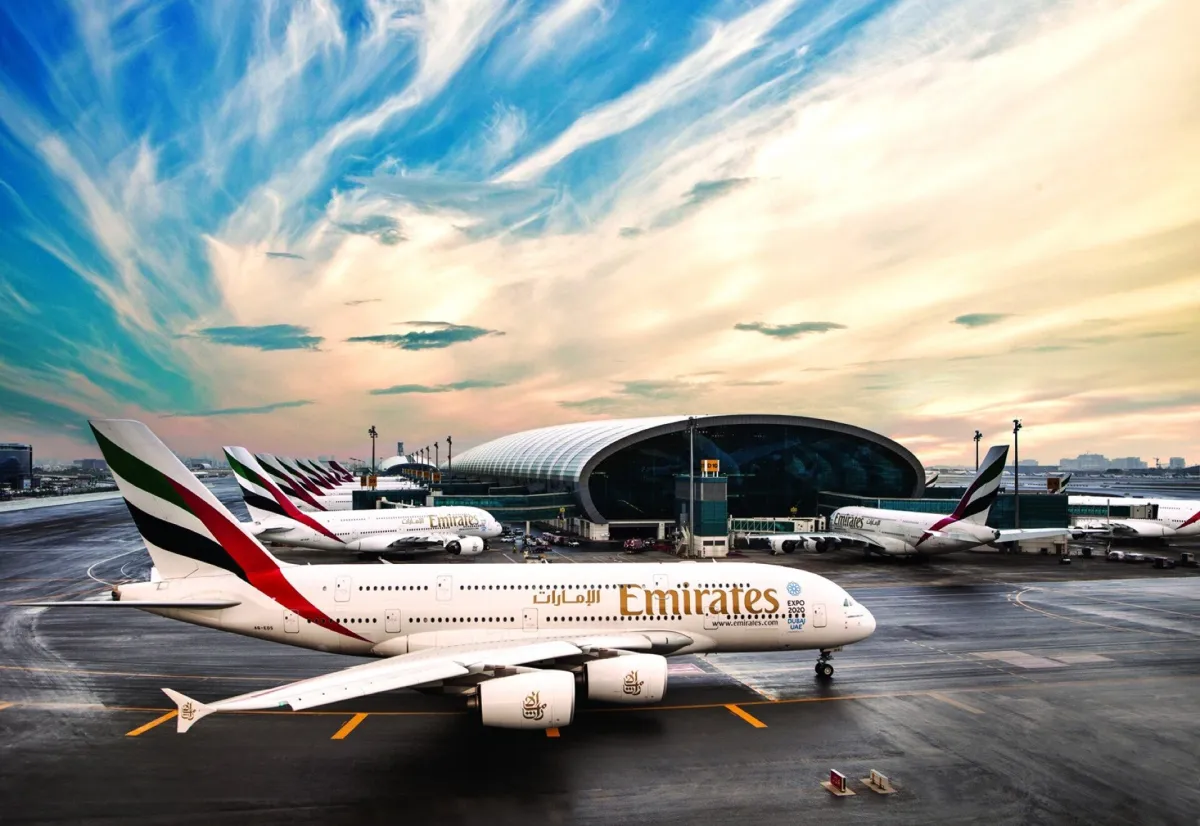
Emirates Skywards has four tiers: Blue, Silver, Gold and Platinum. Unusually for a programme of its size, it sits behind no airline alliance, so every benefit lives or dies on Emirates and flydubai flights and Emirates lounges. That makes the tier you can realistically reach a much sharper question than it is elsewhere.
This is a plain guide to the 2026 tiers: what each one requires, what each one actually gives you, and one piece of genuinely useful timing, because a reduced-qualification offer runs until the end of August.
Skywards runs two separate currencies and mixing them up is the classic mistake. Skywards Miles are the reward currency: you earn them and spend them on flights, upgrades and partners. Tier Miles are the status currency: they decide your tier and do nothing else. A member can hold half a million Skywards Miles and still be Blue.
You earn Tier Miles from paid Emirates and flydubai flights and Emirates-marketed codeshares, calculated by route, cabin and fare type. Flights booked with Skywards Miles earn no Tier Miles at all, which catches out anyone hoping to requalify on redemptions. Qualification is cumulative within a 12-month membership year, and Emirates reviews tiers at the end of every month, so your review date is not a fixed calendar point shared with everyone else.
| Tier | Tier Miles | Flight alternative | Bonus on Base Miles |
|---|---|---|---|
| Blue | Entry tier on joining | None needed | None |
| Silver | 25,000 | 25 qualifying flights | 30% |
| Gold | 50,000 | 50 qualifying flights | 75% |
| Platinum | 150,000 | None, plus one Business or First flight required | 100% |
Two details in that table are worth reading twice. First, the bonus is a percentage of Base Miles, not of everything you earn, so a Gold member is not earning 75 per cent more Skywards Miles overall. Second, Platinum has no flight-count shortcut and its premium-cabin requirement is not optional. The Emirates Skywards programme rules require a minimum of one Business Class or First Class qualifying flight alongside the 150,000, and a premium seat bought with Miles or Cash+Miles does not satisfy it.
Blue costs nothing and asks nothing. You get instant upgrades using Skywards Miles at check-in or on board, waitlist priority, free Wi-Fi in First and Business, and free unlimited messaging in Premium Economy and Economy. There is no bonus on Base Miles, no lounge, no extra baggage, and every seat selection in Economy is paid.
It is a perfectly reasonable place to sit if you fly Emirates once or twice a year. The programme's value proposition starts at Silver.
Silver arrives at 25,000 Tier Miles or 25 qualifying flights, and it is more useful than most summaries suggest. The 30 per cent bonus on Base Miles is real money over a couple of long-haul returns. Complimentary Regular seat selection applies, though only for the member and not for anyone travelling with them. Baggage improves by 12 kg on weight-concept routes, and this is where a common myth needs correcting: on piece-concept routes, Silver adds no extra piece at all.
The bigger correction concerns lounges. Silver is widely described as having no lounge access. That is wrong. Silver members can use the Emirates Business Class Lounge in Dubai, with no guest allowance. What Silver does not get is complimentary access anywhere else; outside Dubai, Silver members pay. If your Emirates flying routes through Dubai, which for most people it does, Silver already puts you in a lounge.
Gold sits at 50,000 Tier Miles or 50 qualifying flights, and it is where the programme starts to feel genuinely premium. Lounge access becomes complimentary in the Emirates Lounge in Dubai and worldwide, with one adult or child guest. The bonus on Base Miles rises to 75 per cent. Seat selection extends to Regular and Preferred seats, and critically it covers companions on the same booking rather than just the member.
Baggage improves meaningfully: an extra piece at 23 kg in Economy and Premium Economy on piece routes, an extra piece at 32 kg in Business and First, or an extra 16 kg on weight routes. Gold also brings Business Class check-in counters, priority baggage tagging, priority boarding, and booking priority on sold-out Economy Flex Plus inventory.
Because Skywards has no alliance behind it, Gold concentrates its value on the Emirates network and the Dubai hub. That is exactly right if that is where you fly and close to useless if your travel is scattered across other carriers. It is the single most important thing to weigh before chasing it.
Platinum needs 150,000 Tier Miles and at least one paid Business or First flight. On top of everything Gold gives you, it adds First Class check-in counters for the member and up to four guests regardless of the cabin they are travelling in, complimentary Home Check-in in Dubai through the DUBZ service for the member and up to four guests, and access to both First and Business lounges in Dubai and worldwide with one adult and two children under 17.
Two Platinum benefits are less well known and more valuable than the check-in perks. The first is what Emirates calls Gold Partner membership, which lets a Platinum member nominate another member for Gold status outright. For a couple who fly together, that effectively halves the cost of two Gold memberships.
The second is expiry. Skywards Miles normally expire three years from the date of the flight that earned them, then fall away on the last day of your birthday month immediately following, so the practical life is three years plus up to another twelve months. Miles held by Platinum members do not expire for as long as they hold Platinum. Lose the tier and the balance gets an adjusted expiry date shortly after the next review. For a heavy Emirates flyer sitting on a large balance, that is a quiet but substantial benefit.
One thing to strike off the Platinum benefit list you may have read elsewhere: there is no published Platinum-only telephone line. Emirates offers priority handling through the Skywards call centre, which is not the same claim.
Here is the actionable part. Until 31 August 2026, Emirates is letting members renew or move up a tier on 80 per cent of the usual requirement. The Emirates programme updates page sets out the reduced numbers:
Two pieces of small print matter more than the headline. The renewal and upgrade paths run on different windows: renewal applies to members whose membership tier review date falls between 31 May and 31 August 2026, while the upgrade path runs from 8 May to 31 August 2026. Check your own review date before assuming you are covered.
Running alongside it is a 20 per cent bonus Tier Miles offer on any one-way or return journey completed between 8 May and 31 August 2026, on Emirates-marketed flights operated by Emirates or flydubai and flydubai-marketed flights operated by either, irrespective of cabin, fare brand, booking channel or booking date. Classic Reward tickets, codeshares and interline segments are excluded, and the bonus credits within 48 hours. There is one trap in the promotion terms worth knowing before you plan around it: once you renew or upgrade using the bonus Tier Miles, no further bonus Tier Miles are credited.
These are temporary numbers. On 1 September 2026 they revert to 25,000, 50,000 and 150,000. We covered the timing of this offer, and the disruption-era protections that expired alongside it, in our piece on the Emirates Skywards mid-2026 status window.
Two mechanics that many programmes offer are absent here, and it is better to know that in advance.
There is no soft landing. Miss your threshold at review and you drop one tier, without a grace period or a partial credit. And by default there is no rollover: Tier Miles or qualifying flights earned in excess of what your tier required are not carried forward.
The one exception is invitation-only. Emirates operates a set of Exclusive Platinum Privileges, the first of which lets a selected Platinum member carry forward up to 50,000 excess Tier Miles into the next Platinum cycle. Eligibility is spend-gated and, in Emirates' own words, identified at the airline's sole discretion. It is not something you can plan towards. If you want a programme with published rollover, our guide to soft landings and rollover covers who actually offers it.
Every judgement about Skywards comes back to one structural fact: there is no alliance behind it. Emirates has bilateral partnerships, most substantially with flydubai, but no Star Alliance, oneworld or SkyTeam membership. That cuts both ways and it is worth being explicit about which way it cuts for you.
Against Skywards: a Gold card gets you nothing at all when you fly Lufthansa, Singapore Airlines or British Airways. A Star Alliance Gold or oneworld Sapphire holder walks into lounges across dozens of carriers; an Emirates Gold walks past them. If your flying is genuinely spread across airlines, the same effort invested in an alliance programme buys benefits in far more airports.
In its favour: what Emirates does control, it controls completely. The Dubai lounges are large, the network through Dubai is enormous, and the benefits are not diluted by alliance-wide standards that force a carrier to treat thousands of partner elites the same as its own. A Platinum member at Dubai is a genuinely high-priority customer in a way an alliance elite passing through a partner hub rarely is.
The practical test is simple. Count the long-haul trips you take in a year that both start or finish in the Gulf and could plausibly route through Dubai. If that number is three or more, Skywards concentration makes sense. If it is one, credit those flights and put your effort somewhere with an alliance behind it.
Tier Miles decide your status, but Skywards Miles are what you spend, and the two behave very differently. Skywards Miles come from flying, from partner activity and from the reward currency conversions Emirates supports, and they are spent on Classic Rewards, on upgrades, and on the airline's various non-flight redemptions.
Two things are worth knowing before you plan around them. The first is that Emirates passes substantial carrier-imposed charges onto award tickets, payable in cash or, unusually, in additional Miles. A Classic Reward is rarely a miles-only transaction, so the comparison to run is always miles plus cash against the cash fare. The second is the expiry rule covered above: three years from the flight, then the end of your birthday month, unless you are Platinum. For a member earning steadily but redeeming rarely, that clock is the single biggest risk to the balance, and it is the strongest practical argument for pushing to the top tier if you are close. Note that the birth-month element goes away for miles earned from 1 June 2027, when Emirates moves to a flat three years from the flight or partner activity date; our cross-programme expiry reference sets out that change and how the other nineteen programmes compare.
For most Emirates flyers the target is Gold. It is where worldwide lounge access, a 75 per cent bonus, companion seat selection and a real baggage uplift arrive together, and where the reduced-qualification offer makes the arithmetic noticeably easier this summer. Silver is a sensible waypoint and better than its reputation, particularly if you transit Dubai.
Platinum is worth chasing only if you are a genuine premium-cabin regular on the Emirates network. The 150,000 Tier Miles and the mandatory Business or First flight are a serious bar, and the benefits that justify the climb, Gold Partner and no mile expiry, only pay off for someone with a big balance and a travelling partner. Our guide on when to stop chasing status is largely about resisting exactly this kind of climb.
The hard part is rarely one tier rule in isolation. It is seeing whether the Emirates flights you have already booked, plus whatever you can add before 31 August, will clear the Tier Miles you need, and how that sits alongside any other airline or hotel status you are trying to hold at the same time. That cross-programme view is what Miles Mosaic is built for: it forecasts whether your booked and planned trips reach or keep status across every programme you use, without ever asking for an account password.
See your requalification forecast in under a minute. No account, and never a loyalty password.
Forecast my status, free →Share
Last reviewed: · How we research and update
Emirates Skywards' disruption-era protections end on 30 June 2026, while a 20% reduced-qualification promotion runs to 31 August. Here is h…
Read article →Emirates Skywards Gold in 2026: 50,000 tier miles qualification, Emirates lounge access at Dubai, and chauffeur-drive.
Read article →A candid cost-benefit guide to elite status in 2026: when mid-tier perks are not worth the spend, and how to decide which tiers to defend a…
Read article →An honest editorial on the credit-card mechanisms that genuinely accelerate elite status in 2026, and the ones that are mostly marketing.
Read article →