
Soft Landing and Status Roll-Over: What Happens If You Fall Short in 2026
What actually happens when you don't requalify for elite status in 2026, and how to plan around soft landings, roll-overs, extensions, and …
Read article →Independent Miles Mosaic guide. No programme partnerships, no account linking, no scraped balances. Sources cited below; corrections welcomed.
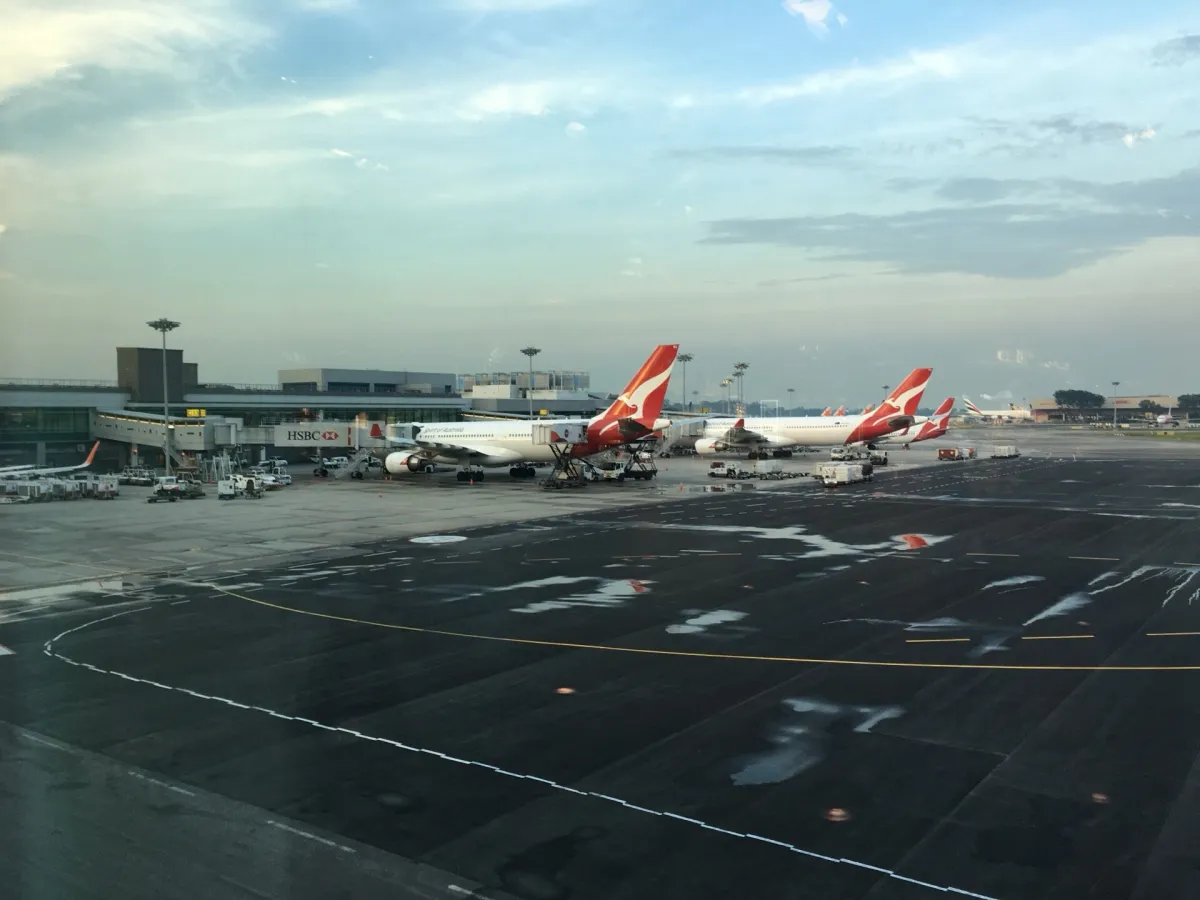
Qantas is making the biggest set of status changes in the programme's history across 2026 and 2027. Status Credits will roll over, they will be earnable on the ground for the first time, and the separate lower threshold for keeping a tier disappears. Two of those three are good news. The third is not.
Here is what is actually changing, when each piece lands, and how the parts interact, because announced together they partly cancel each other out.
Updated 15 September 2026: every remaining reference to "late 2026" has been replaced with the dates Qantas has since published. Status Credits on the ground launches on 8 December 2026, and 7 December 2026 is the last day to attain Points Club, Points Club Plus or Green Tier. Two of the ten ground-earning Status Credit values have now been published, and the Classic Flight Rewards item has moved from unconfirmed to confirmed.
Updated 8 September 2026: the Gold Status Credit rollover cap in this article has been corrected from 300 to 350. Qantas's member-facing programme-changes page showed 300 when this piece was first published and shows 350 as at 8 September 2026, matching its original February 2026 media release. The rollover launch date has also been made specific: 8 December 2026.
This is the headline and it is genuinely new for Qantas. Members who overshoot their tier requirement will carry part of the excess into the next membership year rather than watching it evaporate.
| Tier | Share of excess rolled over | Cap |
|---|---|---|
| Bronze | Not eligible | None |
| Silver | 25% | 100 |
| Gold | 50% | 350 |
| Platinum | 50% | 500 |
| Platinum One | 50% | 500 |
Three details are worth pinning down because most coverage has them wrong. Silver rolls over a quarter of its excess, not half. Bronze members are excluded entirely, as are members on Status Hold. And there is an absolute ceiling: Qantas states that the maximum number of Status Credits that can be rolled over for any member is 500.
The Gold cap is worth pinning down, because it has moved on Qantas's own pages. Qantas's media release of 26 February 2026 said 350 Status Credits for Gold. Its member-facing programme-changes page showed 300 for part of 2026, which is the figure this article previously carried. As at 8 September 2026 that page states 350 for Gold and 500 for Platinum and Platinum One. Plan on 350. Qantas has changed the published number twice without issuing a correction either time, so check the page before you rely on it.
Rolled-over Status Credits are also not fully equivalent to earned ones. They do not count towards Lifetime Status, towards bonus Rewards, or towards Status Accelerator and Challenge requirements. For Platinum One they count towards the 3,600 total but not towards the 2,700 that must come from Qantas-numbered flights.
The second change is the one that will matter most to members who do not fly enough. Qantas will let members earn up to 140 Status Credits each membership year by earning Qantas Points across ten categories: credit cards, banking and home loans, insurance, car, home utilities, hotels and accommodation, holidays and experiences, everyday shopping, retail and lifestyle, and sustainability.
Put 140 against the thresholds and it is meaningful without being transformative. It is 47 per cent of Silver's 300, 20 per cent of Gold's 700 and 10 per cent of Platinum's 1,400. For a member sitting just short of Silver or Gold at the end of a membership year it is decisive. For anyone chasing Platinum it is a rounding adjustment.
Ground-earned Status Credits do count towards Lifetime Status, which is a genuine loosening: Qantas's lifetime pages currently restrict lifetime accrual to Qantas and Jetstar flights. They do not count towards the Loyalty Bonus, the Platinum and Platinum One Bonus Rewards, or Status Accelerator and Challenge requirements.
Qantas has since published the full partner list behind each of the ten categories, two of the ten Status Credit values, and no points target for any of them. We go through the categories, the eight exclusions and the retroactivity rules in our guide to what actually counts towards Status Credits on the ground.
For readers outside Australia, and this matters for the substantial group who credit oneworld flying to Qantas from Asia, eligibility is confirmed but the practical ceiling is lower. The programme-changes FAQ says overseas members are still eligible, while noting that your location may limit some of the ways you can earn Qantas Points and that you may therefore not reach the full 140. Since most of the ten categories are Australian banking, utility and retail partners, an Asia-based member should plan on considerably less. Qantas has published no offshore figure.
This is the change that costs people money, and it has been presented as a simplification.
Today, Qantas asks for more Status Credits to attain a tier than to keep it. From later in 2027 the two numbers merge, and it is the retention figure that rises to meet the attainment figure rather than the other way round.
| Tier | Attain now | Retain now | Single target from 2027 |
|---|---|---|---|
| Silver | 300 | 250 | 300 |
| Gold | 700 | 600 | 700 |
| Platinum | 1,400 | 1,200 | 1,400 |
| Platinum One | 3,600 | 3,600 | 3,600, unchanged |
Every target also carries the requirement to take at least four flights with a Qantas (QF) or Jetstar (JQ and GK) flight number. Note that Jetstar sectors count, which is often reported incorrectly. Platinum One works differently again and does not use the four-flight rule at all: it requires at least 2,700 of its 3,600 Status Credits on flights with a Qantas flight number.
The effect is a 50 to 200 Status Credit increase in what it takes to hold a tier you already have, depending on the level. For a Gold member who has settled into clearing 600 each year and no more, an extra 100 Status Credits is one more premium-cabin domestic return, or several discount-economy hops, every year from 2027 onwards.
Announced together, these two changes are close to a trade rather than two separate improvements, and which side of it you land on depends entirely on how lumpy your flying is.
If your travel varies year to year, rollover is a real win. A strong year now banks up to 350 or 500 Status Credits against a weak one, which is exactly the protection a variable travel pattern needs and which Qantas has never offered before.
If your flying is steady and you have been comfortably clearing the retention number without ever reaching the attainment number, you are worse off. You lose the cheaper retention path and gain the ability to bank an overshoot you do not have. That group, the reliable but not heavy flyer, is the one that pays for this package.
There is a third change that sharpens the trade. The Loyalty Bonus is being retired in 2027. Today, members earn a bonus for every 500 Status Credits earned on eligible Qantas or Jetstar flights, up to four times a membership year. Qantas is explicit that rollover replaces it. So the excess Status Credits that used to trigger a Loyalty Bonus now roll forward instead, which is better for some patterns and worse for others, but is certainly not the pure addition the announcement implies. The Platinum and Platinum One Bonus Rewards survive.
Both retire on 8 December 2026. Qantas's programme-changes page gives 7 December 2026 as the last day to attain Points Club, Points Club Plus or Green Tier, with Green Tier benefits concluding on 8 December. One caution: Qantas's own media release says members can continue attaining Points Club "until 8 December", a one-day discrepancy with its FAQ. Work to 7 December.
The grandfathering differs sharply between them, and it matters. Members who attain or retain Points Club or Points Club Plus before retirement continue to enjoy the benefits for their current membership year and through the whole of the next one, which is a generous run-off. Green Tier is harsher: benefits conclude on the retirement date itself, with a 90-day window to select an unclaimed bonus reward of either 10,000 Qantas Points or 50 Status Credits. If you hold Green Tier and have not claimed your reward, that is a live deadline worth diarising.
For the deeply loyal, 2027 brings five new Lifetime Gold milestones. Qantas describes these two ways on the same page and only one of them is usable. The published ladder is a set of absolute lifetime Status Credit balances: 25,000, 35,000, 45,000, 55,000 and 65,000. Each awards a complimentary year of Platinum status.
The alternative framing, a year of Platinum for every 10,000 Status Credits earned beyond the Lifetime Gold threshold, does not reconcile with that ladder. Lifetime Gold sits at 14,000, so the first milestone at 25,000 is 11,000 above it and only the subsequent four are spaced 10,000 apart. Work from the absolute balances.
| Lifetime tier | Lifetime Status Credits |
|---|---|
| Lifetime Silver | 7,000 |
| Lifetime Gold | 14,000 |
| Lifetime Platinum | 75,000 |
Those three lifetime thresholds come from Qantas's lifetime status page. The milestone years are awarded retrospectively, do not expire, and a maximum of five can be banked at once. They are forfeited on reaching Lifetime Platinum, which is a slightly odd design but a problem very few people will ever have.
Three smaller changes travel with the headline package and are worth knowing before you judge it.
New tier benefits land in early 2027. Qantas is adding Hotels and Holidays vouchers, points-only offers at Qantas Marketplace and Qantas Wine, and an extra Lounge Invitation for Silver members. None of these change qualification, but the Silver lounge pass is a real sweetener at the tier that otherwise gets least from the programme.
Award search got better first. In March 2026 Qantas launched a Classic Reward search tool covering Qantas, Jetstar and around thirty partner airlines in one place, which removes a genuine friction point for anyone trying to spend points across oneworld rather than only on Qantas metal.
Status Credit earning on Classic Flight Rewards is returning, and Qantas has now confirmed it. Its media release of 27 August 2026 says that later this year a select Qantas Points-earning credit card will let members earn Status Credits on Classic Reward seat bookings for the first time, with full details to be announced in the coming months. Which card, what the earn rate is and when it starts are all still unpublished, so the benefit is confirmed but not yet plannable.
Rollover is not new in the industry, and the shape Qantas has chosen is on the conservative side. Percentage-capped rollover with a hard ceiling of 500 is meaningfully tighter than a straight carry-forward, and the exclusion of rolled credits from Lifetime Status, Status Accelerators and bonus Rewards narrows it further. What Qantas has built is a smoothing mechanism for uneven years, not a way to bank your way to a higher tier.
The comparison that matters is with the retention threshold it replaces. A programme that lets you keep a tier on 600 when attaining it took 700 has already given you a form of forgiveness, just an invisible one. Trading that for a visible, capped rollover is defensible, and for genuinely lumpy travel it is better. It is simply not the unambiguous improvement the announcement frames it as, and members whose flying is steady should price it accordingly.
Three practical conclusions.
If you are near a tier now, the calendar matters more than usual. Rollover arrives on 8 December 2026 and the higher retention targets arrive later in 2027, so there is a window in which you can bank an overshoot under the old, cheaper retention rules. Overshooting deliberately in your first post-rollover membership year is the single highest-value response to this package.
If you hold Green Tier, claim your bonus reward. The 90-day window after retirement is the tightest deadline in the whole announcement, and unlike Points Club there is no run-off year.
If you are a steady Gold, reprice the tier. An extra 100 Status Credits a year, permanently, is a real cost. Our guide on how to keep airline elite status covers the honest version of that calculation, and soft landings and rollover compares what Qantas is now offering against the programmes that have had rollover for years.
One thing worth saying in Qantas's favour: taken as a whole this is a serious attempt to make status less brittle, and rollover plus ground earning genuinely help members whose travel is uneven. The cost is carried by the members whose flying is predictable, which is a defensible trade even if it is not the one the marketing describes. Keeping track of where you sit against both the old and new numbers across a two-year transition is exactly the kind of thing Miles Mosaic is built for: it forecasts whether the trips you have booked will hold your status, across every programme you use, without ever asking for an account password.
See your requalification forecast in under a minute. No account, and never a loyalty password.
Forecast my status, free →Share
Last reviewed: · How we research and update
What actually happens when you don't requalify for elite status in 2026, and how to plan around soft landings, roll-overs, extensions, and …
Read article →When does each airline and hotel programme’s qualification year reset? A 2026 reference covering calendar-year, April–March, rolling-window…
Read article →oneworld in 2026: the live 15-member roster, Ruby, Sapphire and Emerald benefits, the best frequent-flyer programmes to hold, the strongest…
Read article →A practical 2026 playbook for renewing airline elite status efficiently: audit your standing, forecast from booked trips, credit partner fl…
Read article →