
KrisFlyer Elite Gold: 2026 Tracker
Singapore Airlines KrisFlyer Elite Gold in 2026: 50,000 elite miles in 12 months, Star Alliance Gold, KrisFlyer Gold Lounge.
Read article →PPS Value is calculated from the fare paid on Singapore Airlines Suites, First and Business class, at one PPS Value per Singapore dollar of airfare and surcharge. Economy and Premium Economy earn none. You reach PPS Club membership at 25,000 PPS Value within any 12 consecutive months, then renew on the same amount each membership year. Solitaire PPS Club needs 50,000.
Independent Miles Mosaic guide. No programme partnerships, no account linking, no scraped balances. Sources cited below; corrections welcomed.
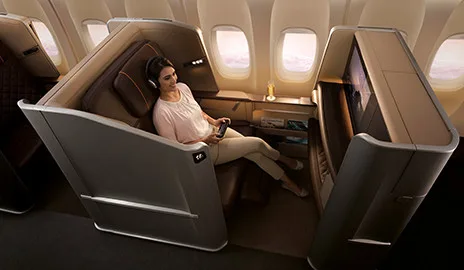
Singapore Airlines PPS Club is the airline's premium-cabin loyalty programme, a distinct tier with its own currency, PPS Value, running alongside the KrisFlyer Elite ladder rather than as its next rung. Needing 25,000 PPS Value within 12 consecutive months, at least 22,500 of it from premium-cabin fares, PPS Club is reached through paid Business, First, and Suites flying.
Chasing this status across other programmes too? Most frequent flyers hold status with more than one airline or hotel. See our guide to tracking and keeping elite status across every programme, then let Miles Mosaic forecast whether your booked trips will requalify you, with no loyalty password required.
The reading on PPS Club in 2026 is that it is recognition specifically tied to Singapore Airlines premium-cabin engagement. The benefits over KrisFlyer Elite Gold are concentrated in the Business Class area of the SilverKris lounges, the PPS Connect personal-assistance service, and the premium recognition at Changi and SQ outstations. This guide covers what PPS Club delivers per the PPS Club privileges page, the realities of the 25,000 PPS Value premium-spend qualification, and whether the tier earns its structural commitment.
PPS Club is the entry tier of Singapore Airlines' premium recognition programme, with Solitaire PPS Club above it. The headline benefits are access to the Business Class area of SilverKris lounges worldwide, with a guest departing on the same flight, the dedicated PPS Connect callback service (an SMS to +65 9184 8888 from the phone number registered to your membership), WhatsApp and in-app calls to Singapore Airlines staff in selected countries for personalised assistance, and priority for Saver award seats, including waitlisted ones, and on airport standby lists.
The PPS lounge experience at Changi Terminal 3 sits in the Business Class section of the SilverKris Lounge, with PPS members accessing the lounge regardless of cabin booked on the SQ flight, including on Economy itineraries, which is structurally different from the Star Alliance lounge access framework that ties access to alliance gold status plus eligible flights. Solitaire PPS members access the more exclusive First Class section of the SilverKris Lounge. Neither tier accesses The Private Room, that facility is reserved for passengers flying in Suites or First on Singapore Airlines metal regardless of frequent flyer status.
PPS Club also carries Star Alliance Gold status, with all the alliance lounge access and partner benefits documented on Star Alliance's benefits and privileges page. The combination of SilverKris Business Class section access plus Star Alliance Gold benefits across partners gives PPS Club members a comprehensive lounge access framework whether they are travelling on SQ metal or on Star partners.
Other PPS Club benefits include priority check-in, boarding and baggage handling on Singapore Airlines even when flying Premium Economy or Economy, double the checked baggage allowance, complimentary Extra Legroom, Forward Zone or Standard seats in Premium Economy and Economy, a 25% tier bonus on KrisFlyer miles flown with Singapore Airlines outside the Q, N, V, K and G booking classes, and KrisFlyer miles that do not expire while you remain a member. Solitaire PPS Club membership (50,000 PPS Value in a membership year, or 25,000 to renew for members who became Solitaire before 1 June 2018) adds access to the First Class area of SilverKris lounges when flying Singapore Airlines or Scoot, First Class check-in, and a Supplementary Card that gives one nominee many of the member's travel privileges, even when flying separately.
Singapore Airlines runs the only major Asia-Pacific loyalty programme that splits its elite recognition across two distinct currencies. KrisFlyer Elite Silver and Elite Gold sit on mileage-based qualification (25,000 and 50,000 Elite miles within 12 consecutive months, for a membership that lasts 12 months from the upgrade) earned across SQ, Scoot, and Star Alliance partner flying on eligible fare classes. PPS Club, by contrast, runs on a separate PPS Value counter that only accrues on premium-cabin Singapore Airlines paid tickets, with no contribution from Economy, Premium Economy, Star Alliance partner flying, or most ground spend. The structural consequence is that PPS Club is a separate track rather than the next rung of the KrisFlyer Elite ladder. Premium-cabin SQ flying earns Elite miles alongside PPS Value, so a PPS Club member can meet the Elite Gold requirement too, but KrisFlyer's terms give a member who qualifies for both the PPS Club privileges, and benefits from the two programmes cannot be combined. The dual structure exists because Singapore Airlines wants to reward two different patterns explicitly, KrisFlyer Elite rewards loyalty across the network, PPS Club rewards SQ cabin-class spend specifically. The premium-cabin-only design also explains why PPS is materially harder to reach than peer programmes, a member cannot grind to PPS Club through volume Economy flying.
PPS Value is derived from what you pay for Singapore Airlines flights in Suites, First Class and Business Class: the airfare and applicable surcharges, but not airport taxes, counted in Singapore dollars. There is no cabin-class table or booking-class multiplier, so paid Suites and First tickets earn more per trip only because they cost more, while an upgraded ticket earns on the value of the original ticket. A ticket bought in another currency is converted to Singapore dollars at IATA's monthly exchange rate for the month of ticketing. Premium Economy and Economy earn no PPS Value, a Business or First Class codeshare flight earns it only when it is on a Singapore Airlines aircraft, a fare paid entirely with KrisFlyer miles earns none, and a miles-and-cash booking earns only on the cash portion. The on-ground earning channel via Kris+, KrisShop, and Pelago contributes at 1 PPS Value per SGD 3 spent (AUD 3 for Kris+ in Australia), but at most 2,500 of it counts towards qualifying for or renewing PPS Club, and 5,000 towards reaching or renewing Solitaire PPS Club (2,500 for members who became Solitaire before 1 June 2018). About SGD 7,500 of spend fills the PPS Club cap, and ground-earned PPS Value above it does not count towards qualifying or renewing and is not saved as Reserve Value, so the channel is a top-up rather than a route to the tier.

PPS Club requires 25,000 PPS Value earned within 12 consecutive months, and renewing it takes 25,000 again within each membership year, counting any Reserve Value carried over from earlier years. PPS Value is a Singapore Airlines-specific currency that measures premium-cabin spend on SQ flights, counting the airfare and applicable surcharges but not airport taxes, as documented on the PPS Club qualification page.
The structural feature of PPS qualification is that, apart from the capped 2,500 PPS Value from Kris+, KrisShop and Pelago, only Singapore Airlines premium-cabin spend counts. Star Alliance partner flying, even premium-cabin partner trips, does not contribute to PPS Value. Economy and Premium Economy on SQ do not contribute. The only realistic path to PPS Club is paid SQ Business, First, or Suites flying on Singapore Airlines aircraft.
25,000 PPS Value translates to substantial SQ premium-cabin spend, roughly SGD 25,000 of airfare and surcharges. If a round-trip Singapore-London in SQ Business costs SGD 8,000-12,000, only its airport taxes fall out of the PPS Value calculation, so the realistic candidate clears the threshold through four such round-trips a year at the lower price or three at the higher one, or through occasional Suites flying combined with Business class activity.
The membership clock works the same way as KrisFlyer Elite's. PPS Club membership lasts 12 months from the date it is upgraded, which Singapore Airlines says can take up to a day after you reach 25,000, and nothing is tied to your KrisFlyer join date. PPS Value earned before the upgrade does not count towards the next renewal, so the first renewal means earning 25,000 again between the upgrade and the end of that membership year. Eligible PPS Value above 25,000 in a membership year is saved as Reserve Value, which stays valid for three years while you keep requalifying, is used before the current year's PPS Value at renewal, and cannot be used to reach Solitaire PPS Club.
| Metric | PPS Club requirement |
|---|---|
| PPS Value | 25,000 |
| Notes | Earned on SQ Suites, First and Business airfare and surcharges, plus up to 2,500 from Kris+, KrisShop and Pelago |
| Qualification period | 12 consecutive months to join, then each 12-month membership year to renew |
Your Singapore Airlines PPS Club forecast
Chasing or holding PPS Club? Enter what you have so far and see where you land. It runs in your browser; nothing is sent anywhere until you choose to save it.
Thresholds verified 2026-08-12. Source Qualification window: any 12 consecutive months, then each membership year.
Earned as a PPS Club member, and at most 5,000 of the 50,000 may come from non-flight spend
KrisFlyer Elite Gold sits operationally below PPS Club in the recognition framework, with the qualification framework being entirely different (50,000 Elite miles versus 25,000 PPS Value). The benefit gap is concentrated in lounge access at Changi, the PPS Connect service, and the premium-cabin recognition that PPS specifically delivers. Both tiers carry Star Alliance Gold, but at Changi Elite Gold uses the KrisFlyer Gold Lounge while PPS Club opens the Business Class area of the SilverKris Lounge, and PPS Club members' KrisFlyer miles stop expiring for as long as they hold the tier.
Above PPS Club sits Solitaire PPS Club, the published top tier of the entire SQ programme. Solitaire PPS qualification requires 50,000 PPS Value earned within a PPS Club membership year, double the PPS Club gate, and renewal needs 50,000 again each membership year, counting any Reserve Value. A grandfather clause maintains a 25,000 PPS Value annual requalification path for members who became Solitaire before 1 June 2018. The structural mechanic is documented on the PPS Club qualification page. The Solitaire benefits delta over PPS Club is concentrated in three areas: access to the First Class area of SilverKris lounges (rather than the Business Class area) when flying Singapore Airlines or Scoot, a Supplementary Card that extends many of the member's travel privileges to one nominee, even when flying separately, and First Class check-in, including the First Class Check-in Reception at Changi Terminal 3.
For travellers whose SQ flying is heavily premium-cabin and substantial in spend, PPS Club is the right ceiling because it provides recognition specifically tied to that engagement pattern. For travellers whose SQ flying is mixed-cabin or whose Star Alliance flying is broader, KrisFlyer Elite Gold captures the alliance benefits without requiring the SQ-premium-cabin spend concentration that PPS demands.
PPS Club sits in the same band as Cathay Diamond, Qantas Frequent Flyer Platinum, and ANA Mileage Club Diamond, the published top or near-top tier of each Asia-Pacific frequent flyer programme. The qualification basis splits sharply across the four. PPS Club runs on spend in Singapore Airlines premium cabins, with nothing from flights operated by partner airlines and at most 2,500 PPS Value from non-flight spend. Cathay Diamond status for 2027 requires 1,200 Status Points earned in calendar year 2026. Qantas Platinum requires 1,400 Status Credits within a membership year, including four flights with a Qantas or Jetstar flight number. ANA Diamond requires 100,000 Premium Points in a calendar year, at least 50,000 of them on ANA Group-operated flights, while Star Alliance flights can count towards the rest. On our reading, PPS Club is the most tightly tied of the four to a single carrier's premium cabins, which matches Singapore Airlines' positioning as a premium carrier rather than a network-volume programme.

The PPS Club path is built almost exclusively on Singapore Airlines premium-cabin flying. The structural rule that only Business, First, and Suites spend on Singapore Airlines flights contributes to PPS Value, with codeshares counting only on Singapore Airlines aircraft and ground spend capped at 2,500, means the path is narrow but clear: pay for and fly SQ premium-cabin tickets.
A worked example clarifies. Take a Singapore-based managing partner whose work travel includes monthly SQ Business class round-trips to either London, New York, or Sydney, and assume paid Business class round-trip fares in the SGD 10,000-15,000 range. Because PPS Value keeps the airfare and surcharges and drops only airport taxes, each trip earns slightly less PPS Value than its price, so twelve such round-trips a year contribute well over 100,000 PPS Value, far past the 25,000 PPS Club threshold and Solitaire PPS Club's 50,000.
Drop the trip cadence to one Business round-trip every two months and the same itinerary still lands above 50,000 PPS Value, clearing PPS Club comfortably. The realistic PPS Club candidate is typically a traveller whose SQ Business or First class flying is structural, usually four to six long-haul SQ premium-cabin round-trips a year combined with some short-haul activity.
SQ Suites flying contributes proportionally more PPS Value per trip given the higher fare. A Suites round-trip priced at SGD 15,000-20,000 earns close to that amount in PPS Value, less airport taxes, a substantial fraction of the qualification threshold from a single trip. The Suites-led path is operationally interesting for travellers whose work or personal pattern includes occasional aspirational SQ flying.
Consider a Singapore-based fund principal whose work pattern includes four Singapore-London round-trips a year in SQ Business class for European investor meetings (paid fares around SGD 11,000 round-trip), two Singapore-New York round-trips in SQ Business class (paid fares around SGD 14,000 round-trip), and one Suites round-trip for a personal trip (paid fare around SGD 12,000). The seven trips cost about SGD 84,000, and because only airport taxes fall out of the calculation, they earn a little under 84,000 PPS Value across the year, comfortably past the 25,000 PPS Club threshold and, for a member already in PPS Club, well past the 50,000 Solitaire PPS Club threshold. Drop the trip cadence to three Singapore-London round-trips a year plus the Suites trip and the same itinerary costs about SGD 45,000, earning a little under 45,000 PPS Value, still clearing PPS Club but short of Solitaire. The principal's profile illustrates the typical PPS qualifier, somebody whose business pattern includes four or more long-haul SQ premium-cabin round-trips a year and whose discretionary travel is also SQ-led. PPS Club is genuinely difficult to reach without that pattern, which is why the tier signals SQ commitment more meaningfully than its KrisFlyer Elite Gold peer.
Three PPS Club surprises catch returning KrisFlyer members. The first is the SQ-only requirement. PPS qualification requires Singapore Airlines premium-cabin spend specifically, no Star Alliance partner flying contributes, even premium-cabin partner trips. A traveller building substantial Star Gold status through Lufthansa or ANA Business class flying does not move closer to PPS Club through that activity. The framework is documented on the PPS Club qualification page.
The second is the PPS Value calculation. PPS Value is close to the fare paid: it counts the airfare and applicable surcharges and leaves out only airport taxes, so a traveller who paid SGD 12,000 for a Business class round-trip earns close to 12,000 PPS Value, less that ticket's airport taxes. A ticket bought in another currency is converted to Singapore dollars at IATA's monthly exchange rate for the month of ticketing, per the KrisFlyer terms and conditions, and a ticket upgraded to a higher cabin earns on the value of the original ticket rather than the upgraded cabin.
The third is the renewal clock. PPS Club membership runs for 12 months from the day it is upgraded, not from the KrisFlyer join date or the calendar year, and the PPS Value that earned the upgrade does not count towards renewing it. A traveller who qualifies in March 2026 after a burst of Business class trips must earn another 25,000 PPS Value between the upgrade and the end of that membership year in March 2027, however strong their calendar-year SQ activity looked before the upgrade. Reserve Value softens later renewals, because eligible PPS Value above 25,000 in a membership year is banked for up to three years and drawn down oldest first. The mechanic rewards consistent SQ premium engagement across the full membership year rather than concentrated activity just before qualifying.
PPS Club is the Singapore Airlines tier specifically designed for travellers whose engagement is heavily premium-cabin SQ flying. The Business Class SilverKris lounge access, the PPS Connect callback service, and the priority handling all reflect the structural commitment that 25,000 PPS Value represents. The 25,000 PPS Value threshold is achievable for travellers with three to four long-haul SQ Business class round-trips a year combined with regular activity. For travellers whose engagement is genuinely SQ-premium-led, PPS Club is the right ceiling; for travellers whose Star Alliance flying is broader, KrisFlyer Elite Gold captures the alliance benefits without requiring the SQ-premium concentration. Track your PPS value toward PPS Club free with Miles Mosaic.
See your requalification forecast in under a minute. No account, and never a loyalty password.
Forecast my status, free →Share
Last reviewed: · How we research and update
Singapore Airlines KrisFlyer Elite Gold in 2026: 50,000 elite miles in 12 months, Star Alliance Gold, KrisFlyer Gold Lounge.
Read article →Star Alliance in 2026: the 26-airline roster, falling to 25 when Asiana leaves in December, Gold benefits, and the best programmes to hold.
Read article →