Aeroplan's 2026 Award Chart Changes: What Went Up, What Didn't, and What It Signals
Air Canada raised Aeroplan partner premium-cabin awards from 1 June 2026 while leaving North America untouched. What changed, what still bo…
Read article →Independent Miles Mosaic guide. No programme partnerships, no account linking, no scraped balances. Sources cited below; corrections welcomed.
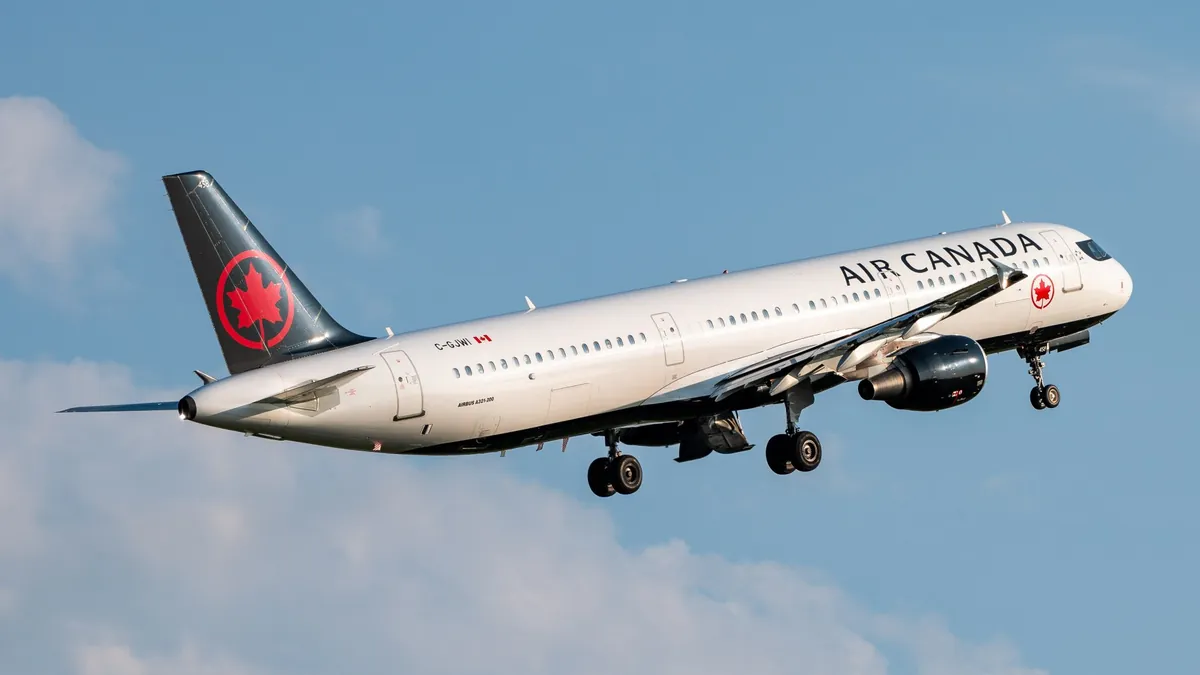
On 11 August 2026, Air Canada announced it had sold a 25 per cent stake in Aeroplan to a group led by Blackstone and La Caisse, with PSP Investments and British Columbia Investment Management Corporation alongside them, for C$2.5 billion. The transaction settled on 17 August. Air Canada keeps 75 per cent and full operational control.
The figure that makes this interesting is not the C$2.5 billion. It is what the C$2.5 billion implies. Air Canada's own release values Aeroplan at C$10 billion. Around the announcement, Air Canada's entire market capitalisation was roughly C$7.6 to C$7.7 billion.
The loyalty programme is worth more than the airline.
Strip out the framing and this looks less like a divestment than a financing.
Air Canada holds a right to buy the stake back, exercisable between the fifth and eighth anniversaries of settlement, so roughly August 2031 to August 2034, at a price set by an agreed formula that gives the investors an internal rate of return of 6.5 per cent, calculated net of all distributions. That 6.5 per cent is Air Canada's own published figure, not an analyst's estimate.
A repurchase right at a defined return is, functionally, borrowing with equity paperwork. The proceeds go where borrowed money goes: Air Canada says it will repay a US$1.2 billion (C$1.7 billion) bond maturity and put most of the balance toward share repurchases, including a substantial issuer bid of up to C$800 million that opened on 20 August 2026.
For context on how much value has been created here, Air Canada bought Aeroplan back from Aimia in 2019 for C$497 million. Seven years later, a quarter of it sold for five times that.
Air Canada's release is unambiguous on one point. Members, partners and employees "will experience no changes as a result of the transaction". Craig Landry, who runs Aeroplan, is quoted saying members can expect full continuity of the programme as it is today. On the analyst call the following day, chief executive Michael Rousseau said there would be no changes to the way members earn or burn points.
Read that sentence again, though, because the scope matters more than the reassurance. It is a statement about causation, not a commitment about the future. Nothing changes because of this deal. It is not a promise that nothing will change. Every airline that has ever devalued a programme could have said the same thing about the month before it did so.
And the release is silent on everything a member would actually want covered:
The investors themselves say nothing about how the programme is run. Blackstone's and La Caisse's quotes in Air Canada's release address investment rationale only. Neither mentions members, redemption economics or governance.
None of that makes a devaluation imminent. It does mean the reassurance is thinner than the headline suggests, and a member reading only the headline would come away with a promise nobody made.
A 6.5 per cent return hurdle is not aggressive, and eight years is a long horizon. But it does introduce something that was not there before: a second party with a contractual interest in Aeroplan's cash flows, and a formula that rewards those cash flows growing.
There are two ways a loyalty programme grows cash flow. It can sell more points to banks and partners, which is good for members because it means more ways to earn. Or it can reduce what each point is worth on redemption, which is not. Historically, programmes have done both, and the second has been the more reliable lever. Aeroplan itself raised partner premium-cabin award pricing from 1 June 2026 while leaving North America untouched, a devaluation that arrived before this deal was announced and had nothing to do with it.
So the honest position is this. The deal does not cause a devaluation. It does not prevent one either, and it adds a party who benefits if one happens. Treat it as a change in the weather rather than a forecast.
The number that should reframe how you think about airline loyalty is not C$10 billion. It is what the major programmes now earn.
| Airline | Revenue from card partners | Source |
|---|---|---|
| Delta | US$8.2 billion from American Express in 2025, up 11% | Delta FY2025 results release |
| American | US$6.2 billion from co-brand and other partners in 2025 | American FY2025 Form 10-K |
| Air Canada | Aeroplan valued at C$10 billion; 25% sold for C$2.5 billion | Air Canada, 11 August 2026 |
Both figures exceed the operating income the same airlines reported for the same year, in Delta's case by a wide margin and in American's by a very wide one. Read the two lines together and the conclusion is not subtle: for the largest US carriers, flying aeroplanes is the activity that makes the loyalty programme possible, not the other way round.
Note one caveat on the American figure so you do not draw the wrong trend from it. The company's 10-K reports US$6.2 billion for 2025 against US$6.1 billion for 2024, but the 2024 number included a one-off cash payment tied to its December 2024 Citi agreement. The year-on-year comparison is distorted, and the underlying growth rate is not the 1.6 per cent the raw figures imply.
The same structure shows up as a liability on the other side of the world. Korean Air and Asiana disclosed in half-year filings released on 19 August 2026 that their combined unused mileage obligation had passed 4 trillion won, roughly US$2.9 billion at about 1,380 won to the dollar, for the first time since Korean mileage programmes began in 1984. Korean Air carries 3.12 trillion won of it, Asiana 946.8 billion won. Part of that build-up is members deliberately sitting on balances until the terms of the merged programme are settled, which the Korea Fair Trade Commission has still not approved nearly two months past the decision date it was expected to meet.
Aeroplan on a balance sheet is an asset worth C$10 billion. The same kind of programme on Korean Air's balance sheet is an obligation worth 3.12 trillion won. Both numbers describe the same thing from opposite ends: your points are somebody's liability, and somebody else's asset, and neither of those parties is you.
Nothing urgent, and be sceptical of anyone telling you otherwise. Aeroplan has announced no change, and speculative redemptions made out of anxiety are how people end up with a booking they did not want at a price they would not have accepted.
Three things are worth doing anyway, and they are worth doing whether or not this deal had happened.
Know the size of the balance you are exposed to. Points are a currency you hold and cannot control the value of. The number that matters is not what your balance is worth today, but how much of your total holding sits in any one programme.
Know when it expires. Expiry is the one devaluation that takes 100 per cent rather than 20 per cent, and it is the one you can plan around with certainty.
Have a redemption in mind, not a balance you are proud of. A large balance with no plan is the position that devaluations punish. The cents-per-point test is more useful applied to a specific trip you intend to take than to a hypothetical one.
Worth separating out: none of this touches elite status. Aeroplan's Status Qualifying Credit thresholds and the tier benefits behind them, set out on Air Canada's status qualification page, are a different mechanism from the points balance, governed by different rules, and nothing in this transaction speaks to them.
That is the unexciting work, and it is the reason Miles Mosaic exists: balances, expiry dates and elite-status progress across 31 programmes in one view, so the answer to "how exposed am I, and to which programme" takes a glance rather than an evening with a spreadsheet.
A loyalty programme valued at C$10 billion, against an airline whose entire market capitalisation was roughly C$7.6 to C$7.7 billion before the deal was announced, is not an anomaly to be explained away. It is the market pricing something correctly: the programme has the more durable revenue, the better margins and the more predictable customer.
That is good news and bad news in the same fact. Good, because a programme that valuable will not be casually degraded, and Air Canada has every reason to keep Aeroplan attractive enough that banks keep paying for its points. Bad, because the pressure to grow those cash flows is now formalised in a contract with a return hurdle attached.
What it should change is your default assumption. A programme is not a benefit an airline grants you. It is a business with investors, disclosed obligations and growth targets, in which you are the raw material. Devaluations are not a betrayal of that arrangement; they are a feature of it. Plan accordingly, and the news stops being alarming.
See your requalification forecast in under a minute. No account, and never a loyalty password.
Forecast my status, free →Share
Last reviewed: · How we research and update
Air Canada raised Aeroplan partner premium-cabin awards from 1 June 2026 while leaving North America untouched. What changed, what still bo…
Read article →A 2026 guide to airline-miles economics: how airlines monetise loyalty, why flying is no longer the main earning engine, and how smart flye…
Read article →A 2026 guide to handling loyalty devaluations, partnership changes, and transfer-ratio shocks without letting your points strategy collapse…
Read article →Air Canada Aeroplan 50K in 2026: 50,000 SQC qualification, Star Alliance Gold, and Maple Leaf Lounge access at AC hubs.
Read article →