Surviving Devaluations in 2026
A 2026 guide to handling loyalty devaluations, partnership changes, and transfer-ratio shocks without letting your points strategy collapse…
Read article →Independent Miles Mosaic guide. No programme partnerships, no account linking, no scraped balances. Sources cited below; corrections welcomed.
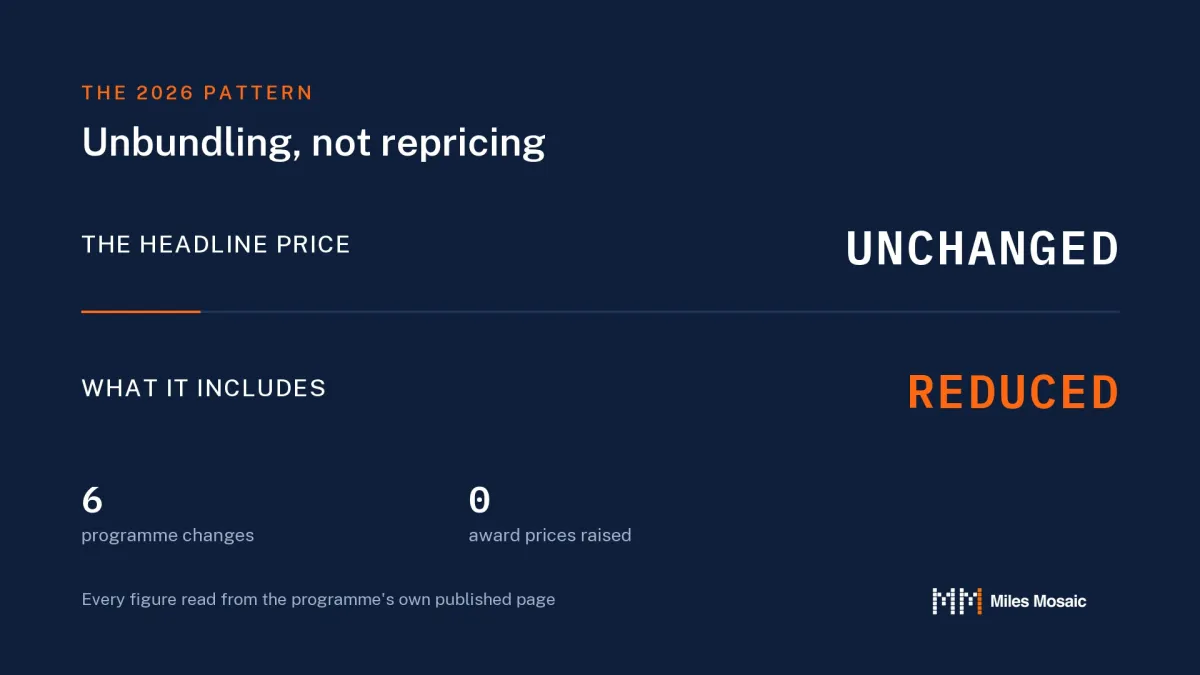
Unbundling is a change that keeps a headline price or a benefit name and reduces what it contains. It is the shape much of loyalty devaluation has taken through 2026, and it leaves no trace in the award chart, so the tests people use to detect a programme getting worse return a clean result.
Four changes fitting that description landed inside the four weeks to 8 September 2026. A fifth takes effect in June 2027, and a sixth has been sitting in a published table since 2025 without ever being announced.
| Date | Programme | What kept its price or name | What came out of it |
|---|---|---|---|
| 23 August 2026 | American, Admirals Club | The membership, and the $750 price point | Guests and partner lounges |
| 25 August 2026 | American AAdvantage | Complimentary upgrades | One cabin of reach on nine routes |
| 8 September 2026 | Flying Blue | The entry award mileage price | Baggage, changes, refunds, and Business lounge access |
| Dated 2021 and 2025 | British Airways | The Avios earning table on Japan Airlines | Half the premium-cabin rate on some flights |
| 20 August 2026 | Hilton, Price Match Guarantee | The guarantee | Several routes to claiming under it |
| 1 June 2027 | Emirates Skywards | Award prices | Up to eleven months of mile validity |
Two of the six are cleaner cases than the rest. Flying Blue and Emirates are the textbook instances: the mileage price is untouched and the product behind it changes. The two American changes apply the same technique to elite benefits rather than to awards. British Airways is the oldest and quietest item here. Hilton's is adjacent, a cash-rate claims process rather than a loyalty currency, and it earns its place because it is the same move performed on a different promise.
The standard way to answer "has my programme been devalued" is to compare award prices. Pull the chart, diff it against last year's, and compute what a point is worth. It is a good method and it has been the right one for a decade, because for a decade devaluation meant a number going up.
Run it on Flying Blue on 9 September and it will report no change. The entry mileage price of an award is the same figure it was the day before. What differs is that the ticket at that price no longer includes a checked bag in Economy, cannot be changed or refunded, and, in Business, no longer includes lounge access. A cents-per-point calculation, which divides cabin value by miles spent, scores that as stable, or as an improvement if the cash fare happens to rise. We have written separately about what a good redemption actually looks like. The point here is narrower: the arithmetic cannot see a change in inclusions.
Emirates is the same shape. No award price moves. The time you have to use the miles shortens.
The other four are not award-chart cases at all, and it is worth being precise rather than claiming more than the evidence carries. Nobody was auditing complimentary upgrades or lounge memberships through an award chart, so the chart is not blind to those changes so much as irrelevant to them. What the four share with the first two is the mechanism rather than the venue. In each, a named product survives and its contents are reduced. British Airways is the extreme version, because its Japan Airlines rates sit in tables dated 2021 and 2025 and were never a 2026 announcement, so there was no moment at which a member could have noticed.
That is the argument. Devaluation is increasingly a change in the inclusions column rather than the price column, and the detection tooling, meaning award-chart comparisons, sweet-spot lists, valuation tables and most of the coverage built on them, reads the price column.
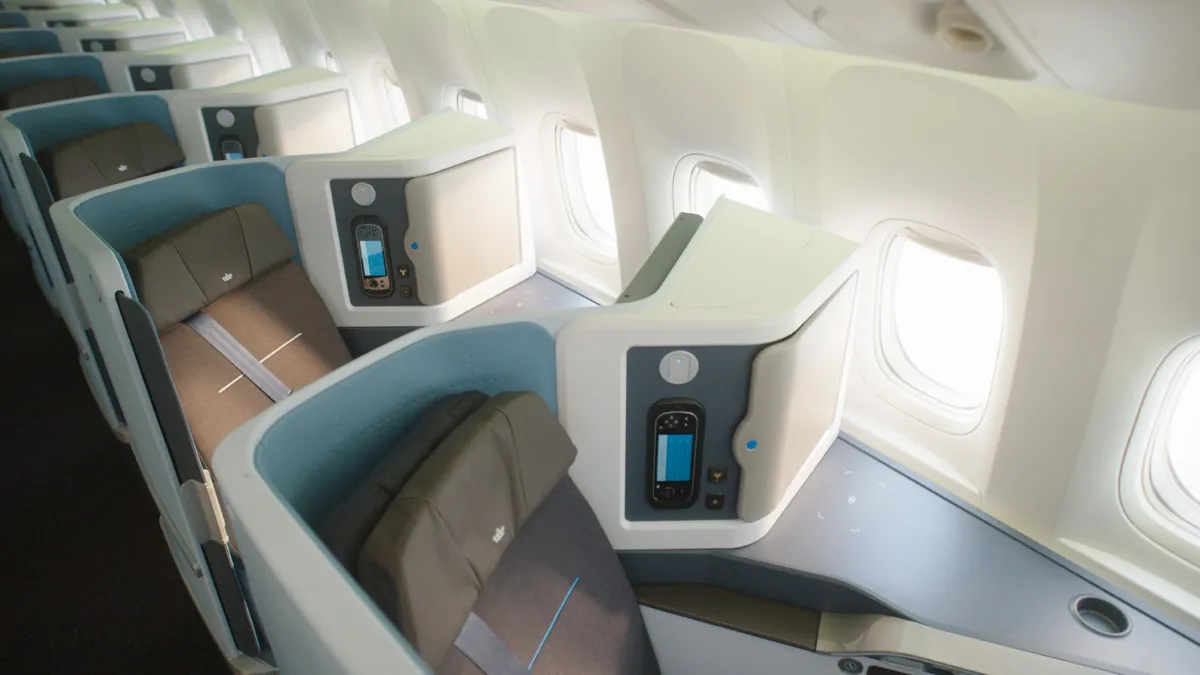
From 8 September 2026, an award ticket on an Air France or KLM-operated flight stops being one thing and becomes three. We have set out the cabin-by-cabin inclusions in our dedicated article on the Flying Blue fare bands, and there is no point repeating them here. One row is what matters for this argument, and it is the Business lounge row.
| Business award booked | Lounge access | Entry mileage price |
|---|---|---|
| Before 8 September 2026 | Included with the ticket | The current entry price |
| From 8 September, Light | Available at an extra cost | The same entry price |
| From 8 September, Standard or Flex | Included | Above the entry price |
Flying Blue publishes that matrix itself, and the mechanism in it is unmistakable. Lounge access on a Business award used to come with the ticket. From 8 September it comes with Standard and Flex, and a Light holder buys it. The airline has not raised the price of a Business award. It has taken something that used to sit inside the award and put a price on it. The same move runs through the other cabins as baggage, changes and refunds.
Flying Blue also states that benefits linked to member status are unchanged and continue to apply on the day of departure, and that tickets issued before 8 September keep their original conditions.
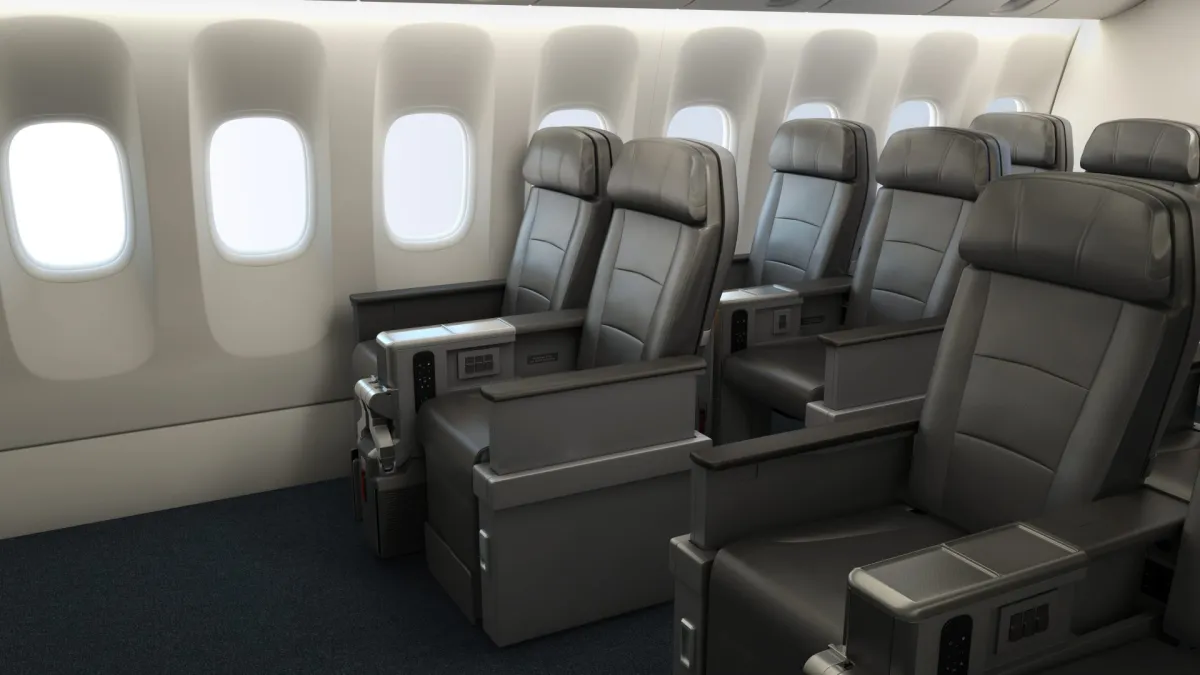
From 25 August 2026, status members holding a Main Cabin ticket on nine transcontinental and Hawaii routes upgrade only as far as Premium Economy, not Business. American publishes the full route list itself and notes that further routes may be added.
One qualifier belongs in the same breath, because it is the difference between a cut and a rout. American states the change applies only to complimentary upgrades. Systemwide upgrades are untouched and still move a member a full cabin. Our full treatment of the August AAdvantage changes has the route list, the three carve-outs and the transition handling.
The Admirals Club repricing is set out in full in the same article, so here it earns its place on one number. From 23 August a single membership sells at a flat $750 at every status tier, admitting the member and nobody else. $750 was the previous Executive Platinum individual rate, and that product carried guests and partner lounges. The same figure now buys a version with neither, which is unbundling performed on a price point rather than on a ticket: the number a member remembers survives, and what sits behind it does not.
British Airways publishes two dated international tables for Avios earning on Japan Airlines-marketed flights, split by who operates the aircraft, plus a separate table for Japanese domestic flights. It is the two international tables that matter here. From 1 April 2025, a JAL-marketed flight operated by Japan Airlines, British Airways or Iberia earns 250 per cent in Business. From 1 April 2021, the same JAL flight number operated by anyone else earns 125 per cent.
Two details make this the purest example in the set. The table itself never moved, so the headline structure is intact and the rate a member sees depends on a field they have to go looking for: not the flight number, but who is flying the aircraft. And the divergence sits entirely in the premium cabins. The four economy rates are identical across both tables, while flexible premium economy runs 150 per cent against 100 per cent, Business 250 against 125, and First 300 against 150. The reduction is aimed precisely at the passengers most likely to notice it, and buried precisely where they are least likely to look. Our piece on the BA Amex and earning changes covers the wider picture.
Hilton's terms page for what it calls the Price Match Guarantee, not the Best Rate Guarantee that most reporting named, states that its terms apply to claims submitted on or after 20 August 2026. Confirmed on Hilton's own page: a member must book with Hilton before claiming, the name and email on the claim must match the reservation, a claim cannot be processed once the member has checked in either in person or digitally, the lower price must beat Hilton's by at least 1 per cent, and there is an explicit list of attributes that make two rates non-comparable, covering room type, view, floor, amenities, dates, guest count and booking terms.
One widely repeated detail does not survive checking, and it is worth correcting rather than repeating. The reported ban on mobile prices is narrower than the headline suggests: what Hilton excludes is a price that cannot be viewed on a publicly available website, and an app-only rate is the example it gives. A rate shown on an ordinary mobile website is not excluded for being mobile. A second reported change, that Hilton has abolished telephone claims, is not something the terms establish either way. The page sets out an online claim route and Hilton still publishes a support number, which is not the same as confirming that a claim can be lodged by phone.
Emirates has confirmed on its Skywards programme updates page that miles earned from 1 June 2027 will be valid for three years from the flight or partner activity date, rounded to the end of the month, replacing a rule that rounds to the end of the member's birth month. Existing balances are unaffected.
Presented as consistency, and it is consistent. It is also shorter. Emirates' own example shows miles earned on the same day expiring on 31 July 2027 for one member and 31 March 2028 for another, purely on birth month, so real-world validity today runs from roughly 36 months to nearly 47. The new rule fixes it near 36. No award price changes. The member has less time. Our cross-programme expiry reference covers how the four different expiry mechanisms work, and our Emirates Skywards coverage tracks the programme's other 2026 changes.
Read the six together and a second pattern appears underneath the first. In almost every case, the member who is insulated is the member with status, or with the right card.
American's upgrade change hits holders of a Main Cabin ticket and leaves systemwide upgrades, an elite currency, intact. Flying Blue states that status-linked benefits continue to apply whichever fare is booked. Emirates exempts Platinum members from mile expiry entirely, for as long as they hold Platinum. Across the hotel programmes the same asymmetry runs in both directions: IHG exempts any elite tier from points expiry, while Hilton exempts nobody at any tier.
No qualification threshold moved in any of these. Nobody announced that status was becoming more valuable. But the distance between having it and not having it widened repeatedly inside a single month, purely by making the unprotected version worse. That is a more durable statement about where loyalty programmes are heading than any threshold change, and it complicates the fashionable argument that elite status matters less than it used to. On this evidence it matters differently: less as a source of upgrades granted freely, more as insurance against the base product being thinned.
Three questions, applied to any programme change:
Airlines unbundled cash fares over twenty years, and the industry now calls the result branded fares and considers the argument settled. What is new is that the technique has crossed from the cash cabin into the loyalty product, where members had been trained to watch a single number. Basic fares were the first crossing point, and the pattern has widened from there. Our devaluation timeline tracks the dated changes as they land, and our piece on the economics driving them covers why programmes reach for this rather than for a price rise.
Miles Mosaic exists mostly to answer a different question, which is whether your booked and planned travel will hold your elite status through the next renewal, across 31 programmes on one screen, without ever asking for an account password. It is relevant here for one reason. If the value of status is increasingly defined by what you are protected from rather than by what you are granted, then knowing precisely where you stand against each renewal stops being an administrative detail. The free Explorer tier carries ads, and Pro removes them at $14.99 a month.
The uncomfortable conclusion is for the reader rather than the product. If you have been tracking your programmes by watching award prices, you have been watching the column that stopped moving. The response to a devaluation is rarely to panic-book; it is to work out which of your balances the change actually touches, and this year that means reading a different column.
See your requalification forecast in under a minute. No account, and never a loyalty password.
Forecast my status, free →Share
Last reviewed: · How we research and update
A 2026 guide to handling loyalty devaluations, partnership changes, and transfer-ratio shocks without letting your points strategy collapse…
Read article →From 8 September 2026 Flying Blue sells awards on Air France and KLM flights as Light, Standard or Flex. What each includes, and what it co…
Read article →American changes elite upgrades on 25 August and card and lounge pricing on 23 August. The nine routes, the new milestone ladder, and what …
Read article →Twenty programmes, four different expiry mechanisms. Which miles die on a fixed clock, which reset on activity, and why redeeming often doe…
Read article →