
KrisFlyer vs Asia Miles vs Avios in 2026
A 2026 comparison of KrisFlyer, Asia Miles, and Avios: expiry rules, redemption strengths, transfer access, and which programme fits which …
Read article →Independent Miles Mosaic guide. No programme partnerships, no account linking, no scraped balances. Sources cited below; corrections welcomed.
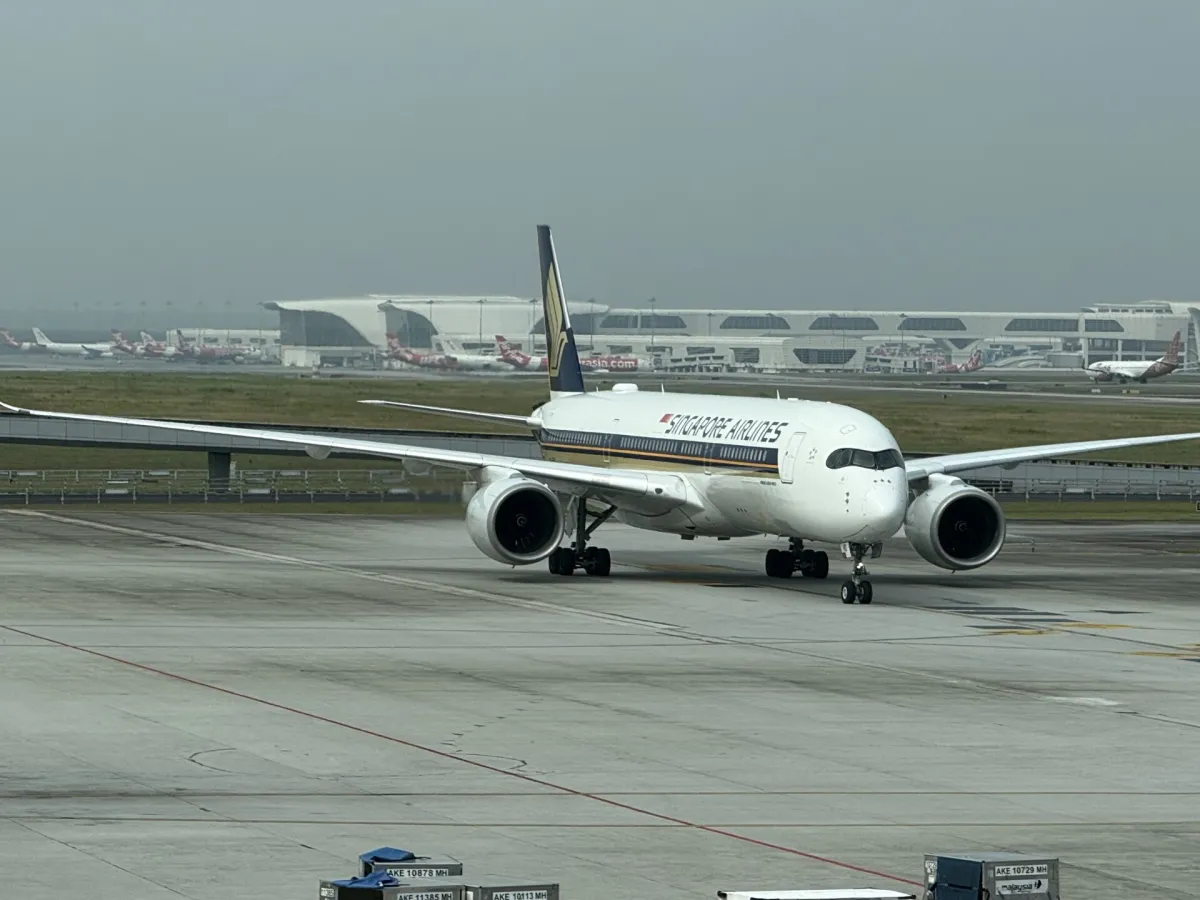
For a traveller based in Singapore the loyalty question is not which programme is best in the abstract. It is which one your bank points can actually reach, what the cash component of an award really costs, and whether your balance will still be there when you come to use it. Those three tests point in different directions.
This is a practical guide to the choice in 2026, built on what the airlines and banks currently publish rather than on the received wisdom, some of which turns out to be wrong.
The standard advice to Singapore-based collectors is that KrisFlyer is the easy currency to feed and Asia Miles is the awkward one. In 2026 that is simply not the case.
Every major Singapore card issuer that reaches KrisFlyer also reaches Cathay Asia Miles. DBS, UOB, Citi, HSBC, OCBC, Standard Chartered, American Express and Maybank all support both. On availability alone the two are level, and have been for some time.
Where they differ is on rate, and the differences are large enough to change which programme you should be feeding from a given card.
| Bank currency | To KrisFlyer | To Asia Miles | Fee |
|---|---|---|---|
| DBS Points | 5,000 : 10,000 | 5,000 : 10,000 | S$27.25 |
| UOB UNI$ | UNI$5,000 : 10,000 | UNI$5,000 : 10,000 | S$27 |
| Citi ThankYou Points | 25,000 : 10,000 | 25,000 : 10,000 | S$27.25, waived on instant transfers |
| HSBC Reward points | 30,000 : 10,000 | 25,000 : 10,000 | Free |
| OCBC 90°N / VOYAGE | 1,000 : 1,000 | 1,000 : 750 | Not published |
| American Express MR | 500 or 550 : 250 | 500 or 550 : 250 | Free |
Two of those rows are decisions rather than data. HSBC is the one issuer where Asia Miles beats KrisFlyer, and by a fifth: 25,000 points buys 10,000 Asia Miles but only 8,333 KrisFlyer miles. HSBC cut its KrisFlyer rate by 20 per cent in January 2025 and left Asia Miles untouched, so an HSBC Revolution or TravelOne holder who defaults to KrisFlyer out of habit is giving up real value. OCBC is the mirror image, with the worst Asia Miles rate in the market: 1,000 VOYAGE miles buys 1,000 KrisFlyer miles but only 750 Asia Miles, a 25 per cent haircut for choosing the wrong destination.
American Express deserves a warning of its own. Its Singapore Membership Rewards rates were devalued on 23 February 2026, raising the cost of airline transfers by roughly a fifth to a quarter across the board. Amex also lists Emirates Skywards transfers as unavailable until further notice on its own site, so treat that route as closed. Any guide still quoting the pre-February ratios is out of date.
Speed is the difference nobody plans for. Transfer times to Asia Miles range from effectively instant at some issuers to several working days at others, with UOB the notable laggard. Because award space can disappear while a transfer is in flight, the practical rule is to know your own bank's timing before you find the seat, not after.
There is also a route that skips all of this. The American Express co-branded Singapore Airlines cards and the KrisFlyer UOB card credit miles straight into KrisFlyer each month, with no conversion step and no transfer fee. The trade-off is that the three-year expiry clock, covered below, starts the moment those miles land rather than when you choose to move them.
Singapore Airlines still publishes a fixed award chart, which in 2026 makes it unusual and useful. There are three price levels: Saver and Advantage both price off the published chart, while KrisFlyer Access applies a dynamic multiplier on top for seats outside those buckets. These are the one-way figures from the chart effective 1 November 2025, on Singapore Airlines metal. Round trips are exactly double.
| Route | Economy Saver | Economy Advantage | Business Saver | Business Advantage |
|---|---|---|---|---|
| Singapore to Hong Kong | 15,500 | 33,000 | 35,500 | 57,500 |
| Singapore to Europe | 44,000 | 79,000 | 108,500 | 141,500 |
The Saver and Advantage rates were unchanged in the April 2026 revision. What did move was the dynamic layer: the Economy multiplier on KrisFlyer Access rose from 1.3 to 1.43, roughly a 10 per cent increase, with Premium Economy up around 11 per cent and the front cabins up 3 to 4 per cent. If you are pricing Access seats rather than Saver, the programme got more expensive this year even though the chart did not change.
Cathay prices differently again, on a distance-banded chart rather than a zone chart, and it does not publish it as prominently. That banding produces a genuinely useful planning quirk on European trips routed through Hong Kong: because the bands are set by total itinerary distance, Frankfurt sits one band below London or Paris for what is otherwise the same journey from Singapore. Whether a given routing falls either side of a band boundary can turn on a few dozen miles, so price the specific city rather than assuming Europe is one number. Asia Miles also repriced parts of its chart again in May 2026.
Put the two side by side in Business and the shape of the decision changes with distance. The KrisFlyer figures are Saver awards on Singapore Airlines metal from the published chart. The Cathay figures route through Hong Kong and come from Mainly Miles' reporting of the May 2026 Asia Miles repricing, since Cathay does not publish the chart prominently. The surcharge column uses the rates in force from 1 August 2026.
| One-way Business | KrisFlyer on SQ metal | Asia Miles on CX metal |
|---|---|---|
| Singapore to Hong Kong | 35,500 miles, no surcharge | About 27,000 miles, plus about US$43.50 |
| Singapore to London | 108,500 miles nonstop, no surcharge | About 119,000 miles via Hong Kong, plus about US$218 |
On the short hop Asia Miles genuinely is cheaper in miles, by about 8,500. Whether that beats a US$43.50 cash charge depends on what you think a mile is worth, and for many people it will. On the long-haul it is not close: KrisFlyer is cheaper in miles, flies nonstop, and adds no cash at all, against a routing that costs more miles, adds a connection and adds roughly US$218 each way.
One caveat that cuts against KrisFlyer, and it matters if you are not flying Singapore Airlines itself. KrisFlyer devalued its Star Alliance chart on 1 November 2025 and withdrew the old free-ride perk that let you add a partner segment at no extra miles. Star Alliance Business to Europe now prices above the equivalent Singapore Airlines award, so the programme's strength is specifically its own metal rather than the alliance behind it.
Award pricing arguments usually stop at the mileage. For a Singapore-based traveller in 2026 the cash side matters more, and it is not close.
Singapore Airlines levies no carrier-imposed fuel surcharge on award tickets on its own flights. It removed them for bookings ticketed on or after 23 March 2017 and has not reintroduced them; a KrisFlyer redemption on Singapore Airlines metal is miles plus airport taxes and government fees. The one caveat worth carrying is that Star Alliance partner awards booked with KrisFlyer miles can still carry that partner's surcharge, so the advantage applies to Singapore Airlines flying rather than to everything you book with the currency.
Cathay does the opposite, and it just got more expensive. From 1 August 2026 Cathay raised its per-sector surcharges by around 41 per cent. A short-haul sector such as Singapore to Hong Kong went from about US$30.90 to US$43.50, and a long-haul sector from about US$123.70 to US$174.60.
In practice that means a Singapore to Hong Kong return redemption now carries about US$87 in carrier-imposed charges, and a Singapore to Europe return routed through Hong Kong carries about US$436.20 across its four sectors. The identical trip on Singapore Airlines carries none. Whatever the mileage comparison says, US$436 is a large enough gap to settle most long-haul decisions on its own. Our piece on the August 2026 Cathay surcharge increase works through the mechanics, including the fact that the rate is fixed at booking rather than at travel.
This is the one test Asia Miles wins outright, and it is not a small thing for anyone who earns slowly.
KrisFlyer runs a hard clock. Miles expire on the last day of the month 36 months after the month they were credited, and each batch carries its own date. Earning new miles does not reset older ones. You can extend a batch once, at US$12 or 1,200 miles per 10,000-mile block, which buys six months for a base member and twelve for Elite Silver and Elite Gold. Only PPS Club and Solitaire PPS Club members hold miles that never expire, and even those get a fresh three-year clock if the status lapses.
Asia Miles is activity-based. Since 1 January 2020, Cathay has kept miles alive as long as the account sees at least one earning or redemption event every 18 months, with the expiry date extending 18 months from the last crediting or debiting date. A single small transaction keeps the whole balance alive indefinitely.
The practical difference is stark. A dormant KrisFlyer balance dies on a fixed schedule regardless of what you do. A dormant Asia Miles balance survives on any qualifying activity. If your earning is slow, occasional, or concentrated in a big transfer you plan to sit on for a while, that difference outweighs a good deal of chart arithmetic.
The status ladders sit at broadly similar heights, but they behave differently and one of them is mid-rebuild.
| Programme | Entry elite tier | Second tier | Window |
|---|---|---|---|
| KrisFlyer | Elite Silver, 25,000 Elite miles | Elite Gold, 50,000 Elite miles | 12 consecutive months |
| PPS Club | PPS Club, 25,000 PPS Value | Solitaire PPS Club, 50,000 PPS Value | 12 consecutive months |
| Cathay membership | Silver, 300 Status Points | Gold, 600 Status Points | Membership year, changing to calendar year in 2027 |
Those KrisFlyer and PPS figures come from Singapore Airlines' own qualification pages. Two things make KrisFlyer easier than it looks. Elite miles can now be earned on the ground at 1 per SGD 1 through Kris+, KrisShop and Pelago, and PPS Value carries a Reserve Value mechanism that lets eligible value above the renewal requirement roll forward. PPS Value earned on the ground is capped for qualification purposes, at 2,500 for PPS Club and 5,000 for Solitaire, so it supplements flying rather than replacing it.
Cathay is the one to watch, because 2026 is a transition year. Cathay's thresholds of 300, 600 and 1,200 Status Points are unchanged into 2027, but during 2026 any renewal, upgrade or downgrade resets your Status Points to zero and your membership ends on 31 December 2026. From 1 January 2027 the programme moves to a calendar-year cycle, stops resetting points on upgrade, adds rollover for Gold and above, and introduces a Diamond Exec tier at 2,400. Our piece on the Cathay 2027 overhaul covers what that means if you are mid-climb.
Neither programme pools miles between adults, and the belief that they do sends people down the wrong path regularly enough to be worth correcting directly.
KrisFlyer for Families is not a pool. It moves miles one way only, from a child aged 2 to 15 into a parent's account, capped at 50,000 miles per calendar year, with a fee of US$5 or 500 miles per 5,000-mile block. Up to five children can be linked and the link unwinds automatically when a child turns 16. The child's account must also have a flight accrual and no credit-card accrual in the previous 36 months. There is no adult-to-adult transfer at all.
What both programmes actually offer is a redemption nominee list of up to five people, which is a different tool for a different problem: it lets you spend your miles on someone else's ticket rather than combining balances. In KrisFlyer, nominees are free to add but locked for six months, and changing one online costs US$30 or 3,000 miles, halved for Elite Silver and waived for Elite Gold and PPS Club. A newly added nominee's flight must depart more than 72 hours after they are added, which is a trap if you are booking last minute.
The strategic consequence is that a couple should decide early which of them is the collector, and feed one account rather than splitting earning across two. Our guide to pooling and transfer strategies covers the programmes that do genuinely pool, which is worth knowing before you assume you have to concentrate.
KrisFlyer, if you fly Singapore Airlines. The combination of a published chart, a large network out of Changi, premium cabins Cathay cannot match from Singapore, and zero fuel surcharge on own-metal awards makes this the default. It is the strongest case in the comparison and it is not particularly close for anyone whose flying is Singapore Airlines-shaped.
KrisFlyer, for long-haul Business to Europe. 108,500 miles one-way at Saver, nonstop, plus taxes only, against roughly 119,000 miles via Hong Kong plus about US$218 each way. Asia Miles loses on miles, on cash and on routing at the same time.
Asia Miles, if you earn slowly. The activity-based model is the single most valuable structural difference between the two, and it matters most to exactly the people who are least likely to notice it: occasional earners with a balance sitting idle.
Asia Miles, for the Hong Kong hop. About 27,000 miles in Business against 35,500 is a real saving, and the surcharge on a single short sector is small enough not to erase it.
Asia Miles, if you bank with HSBC. A 25,000 to 10,000 rate against KrisFlyer's 30,000 to 10,000 is a fifth more value on every transfer, and it is the clearest bank-specific call in the market.
Neither, for family pooling. Concentrate earning in one account instead and use the nominee list.
If you want the head-to-head including Avios, which brings a third set of trade-offs on short-haul and household accounts, our KrisFlyer versus Asia Miles versus Avios comparison goes deeper on the currency question specifically.
The honest answer for most Singapore-based travellers is that this is not an either-or. Bank points are the flexible layer and both destinations are open from almost every issuer, so the discipline that matters is not picking a programme in advance but knowing where your balances sit, which of them are on a clock, and what the cash component of a given redemption will be before you transfer anything irreversibly. That is precisely what Miles Mosaic tracks, across airline and hotel programmes and the major card currencies, without ever asking for an account password.
See your requalification forecast in under a minute. No account, and never a loyalty password.
Forecast my status, free →Share
Last reviewed: · How we research and update
A 2026 comparison of KrisFlyer, Asia Miles, and Avios: expiry rules, redemption strengths, transfer access, and which programme fits which …
Read article →A 2026 guide to pooling and transfer strategy: household accounts, family-sharing rules, timing, and how to avoid locking points in the wro…
Read article →A practical 2026 guide to using transferable credit card points for airline reward flights: search, transfer windows, and how not to lose t…
Read article →How to reach KrisFlyer Elite Silver and Gold in 2026: the Elite mile thresholds, the up-to-20% you can add from ground spend, and the two c…
Read article →